am i ready for the cantabrigian life?

well, hello there. it has been a while since i last wrote about stuff here. there are several reasons for this. the first was that, i was enjoying my fun, relaxing time away from books and academic writing, especially after a very long, stressful period of completing my undergraduate thesis. and then of course, i broke up with my partner of four years. at first, it was quite painful but now i kinda understand why this has happened. it still sucks and i am trying to hold myself together. i cannot help but to feel extremely relieved and happy to be moving on to this new chapter of my life, that basically acts as a band-aid over this horrible heartbreak. there is so much preparation to do that i decided that i am too excited to spend all this precious time grieving. instead, i promised to live by the motto, “you grow through what you go through”.

it’s been about a couple of months since i left university. i was very pleased to graduate with a first class in my degree, especially since the past three years, as rewarding as they were, was a very volatile period in my life. it feels quite strange that the air of uncertainty that dictated most of my life decisions has quelled. not just my relationship, all the money troubles and health problems. it’s not like they have completely vanished. it’s just that i have grown to accept that such issues shouldn’t have to cripple me with anxiety because this is just how life is.

due to this, it is hard not to be proud of myself. yet, i have been feeling pretty down lately. my mother had recently undergone a knee surgery. as usual, i have been assigned the task of being the caregiver as i spend summer waiting for a new start to life. however, i did not expect it to have been such an emotionally draining ordeal, and i was getting worried about sorting out my visa application on time. my preparations have also been an extremely incredibly expensive affair. finances have always been a big worry for me, and i was hoping that living abroad with a scholarship might not make me feel so suffocated. but it looks like living frugally is just a necessary part of life. i should even be thankful that i was considered for an opportunity like this?

but i have a lot of trouble interacting with people. i have not been hanging around with my friends a lot due to my mom’s downtime, coupled with the fact that i am slowly adjusting to not having a special person to consistently communicate… it was annoying to wait for hours at the visa centre, talking to young malaysians who rely too much of their worth on studying abroad, at english universities. i don’t understand what is the huge fuss. so you can only imagine what a cringy ordeal it is for me to have to say the “c” word when one asks, “oh, so which university are you going to??”, only to witness the change of expression, from simple disinterest to complete fascination and awe. not because of all the other things i do, or my personality, my dreams. nuffin’… just because i am going to oxbridge. i really, really, REALLY do not want all this fluff to get to my head so maybe it is just better i avoid mingling with undergrads and keep in tabs with my researcher friends.

in a way, all these issues are extremely petty but i guess i have been feeling vulnerable and therefore, more irritable. i don’t like the idea of leaving my comfort zone. ironically, i have always had the thirst to go abroad to study because i felt very much at odds with the socio-political developments at home, together with my household drama. but the past year has been extremely different. i started feeling more in my skin and found my identity as a historian, together with my organization blossoming with passion. my relationships were improving, in spite of losing some that really mattered. my mother is aging, and it feels daunting to suddenly not be around when something happens. there’s this fear of not being important, relevant to anyone and anything back home. although, this is probably not true. rather, it is a chance to chase an important pursuit for my journey as a malaysian.

i am there for one reason only, and that is to learn everything i can to improve the state of malaysian scholarship, as well as historical education. this is just the exposure i need for my own personal development, but also for a greater hope i have for my home, my surroundings. so what is this cantabrigian life ahead of me? i really do wonder.
netuKINI #2 neither arabisation nor creeping islamisation, just a khat-astrophe

OPINION  |  NETUSHA NAIDU Published: 8 Aug 2019, 6:41 am  |  Modified: 8 Aug 2019, 6:41 am

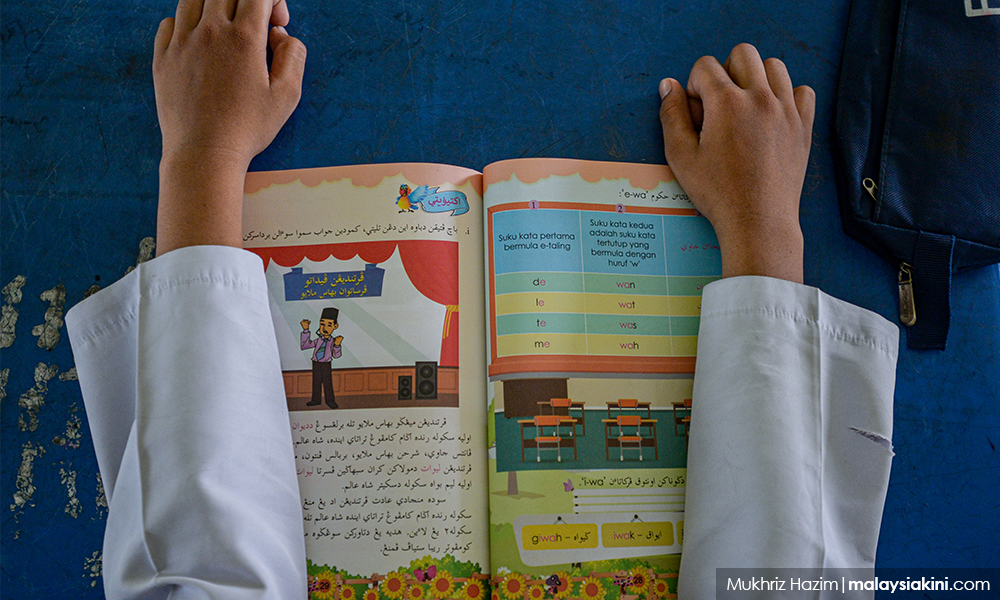
COMMENT | I am in full support of khat being taught as part of Malay language education in national schools.

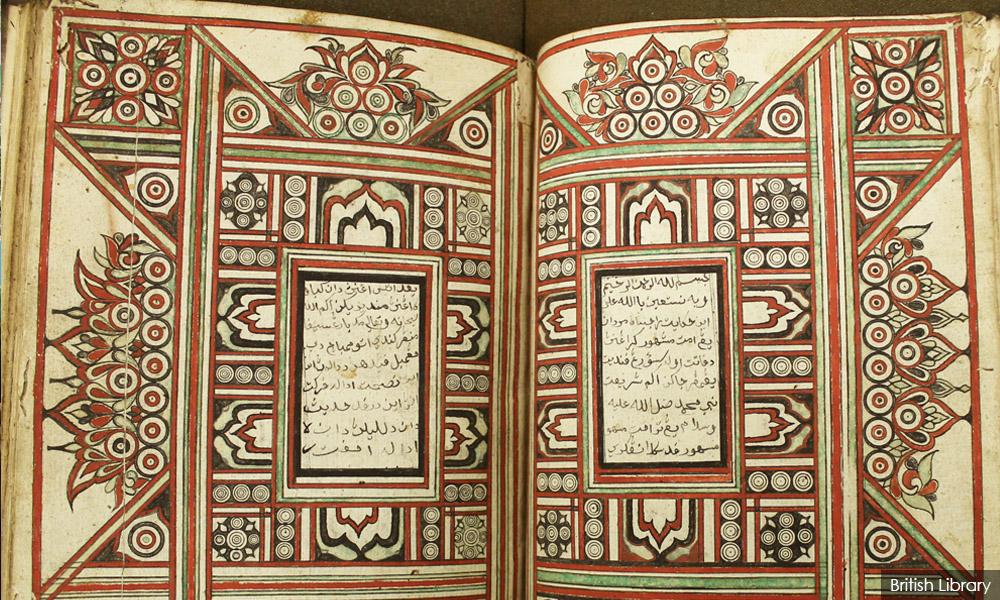
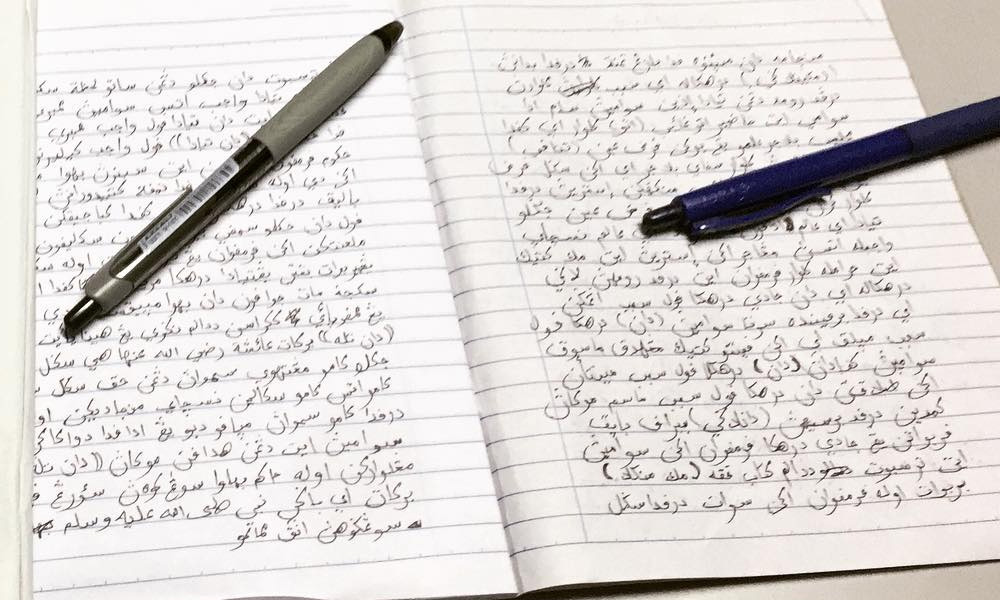
Before I began my undergraduate studies, I decided to enrol in a one-day introductory workshop on the Jawi script, its history and romanisation of the Malay language. 

I recall the wide-eyed amazement of the facilitators, who were young Islamic studies scholars. 

“It’s rare for non-Malays to come by our centre these days unless they are researchers from abroad. We are happy that you have decided to join us today,” one of them warmly said.Advertisement

For me, it was always very fascinating to find out more about the overlap between the Malay and Arab worlds because of its rich intellectual and cultural diaspora. 

My interest in Jawi started developing since my schooling days. This was because I realised that many prominent Malay intellectuals, dating back to as far as the 13th century, wrote their contemplations in Jawi. 

Yet, this indigenous philosophical tradition had been rendered quite invisible in our everyday conversations about Malaysian intellectual history.

It was from this workshop that I learnt various scholars have concurred that Jawi writing is a product of the legacy of Islam and the Arabic language spreading across the Malay Archipelago. 

The inability to separate Islam from Jawi stems from a commonly held notion that Arabic remains superior to other forms of language in the region due to its status as the language of the Quran.

The most popular held notion about the origins of the Jawi script is the one propounded by the venerated Islamic philosopher, Syed Muhammad Naquib Al-Attas. 

According to him, Jawi was directly derived from Arabic, introduced by Arab missionaries of Hadrami origin without any intermediaries such as Persians and Indians.

It was from this moment on, I found myself determined to learn more about Malaysia’s past through Jawi manuscripts. During my second year in university, I enrolled in a module titled ‘Understanding the Malay World’, taught by my mentor, Sumit Mandal. 

Eager for me to practice my newly acquired reading skills and knowledge of Jawi, he encouraged me to undertake a research project on a Malay manuscript of my choice. I selected the title Hikayat Syah Mardan.

The purpose of my study of this text was to explore intercultural connections that go beyond the modern-day borders of Malaysia and Indonesia.

As I furthered my study of this 17th-century Malay manuscript, it dawned on me that the understanding of the Jawi script and its origins I was previously taught was not set in stone. 

In fact, there is a vast amount of literature that continues to challenge the exclusive ‘Islamic’ nature of literature written in Jawi.

Through a detailed analysis of Hikayat Syah Mardan, I discovered that it was quite difficult to pin down the tale’s origins to a single place. 

Similar narratives and characters have been found in places like India and Indonesia, Thailand and Vietnam, making this manuscript a testament to more complex social dynamics taking place in the Malay world during this period.

An even more interesting discovery was that this hikayat demonstrates how Hindu-Buddhist motifs take centre stage in creating an effective narrative about its protagonist’s spiritual advancement. 

This led me to conclude that pedagogical Islamic teachings that were being expressed in Malay society were dependent on older, persisting literary conventions that belonged to the Hindu-Buddhist history of our nation. 

Without them, profound lessons of courage, humility, wisdom and love would have been lost in translation.

These findings forced me to reconsider the extent to which Malay manuscripts are exclusively framed within the conventions of the Arabic language, and monolithic Islamic ideals. 

Was Hikayat Syah Mardan an anomaly in the vast array of Malay literature? Surprisingly, it isn’t! 

Southeast Asian historian Ronit Ricci’s examination of The Book of One Thousand Questions revealed that notions such as “creeping Islamisation” or “Arabisation” do not truly capture the transformative process in religion and culture that took place in Southeast Asia. 

Instead, she uses the word “Arabicised” to describe how Arabic influenced local languages by “combining with them rather than by replacing them.”

Ricci demonstrates this by showcasing variations of the book in Javanese (Serat Samud), Malay (Kitab Seribu Masalah) and Tamil (Ayira Macala). 

Through her study, it became evident that the literary tradition of Southeast Asia was “richly interconnected both with a distant past and with a local present” in order to create and maintain a shared sense of identity between Muslims and non-Muslims alike.

Yet, it appears that such a conception of traditional Malay literature has become marginalised.

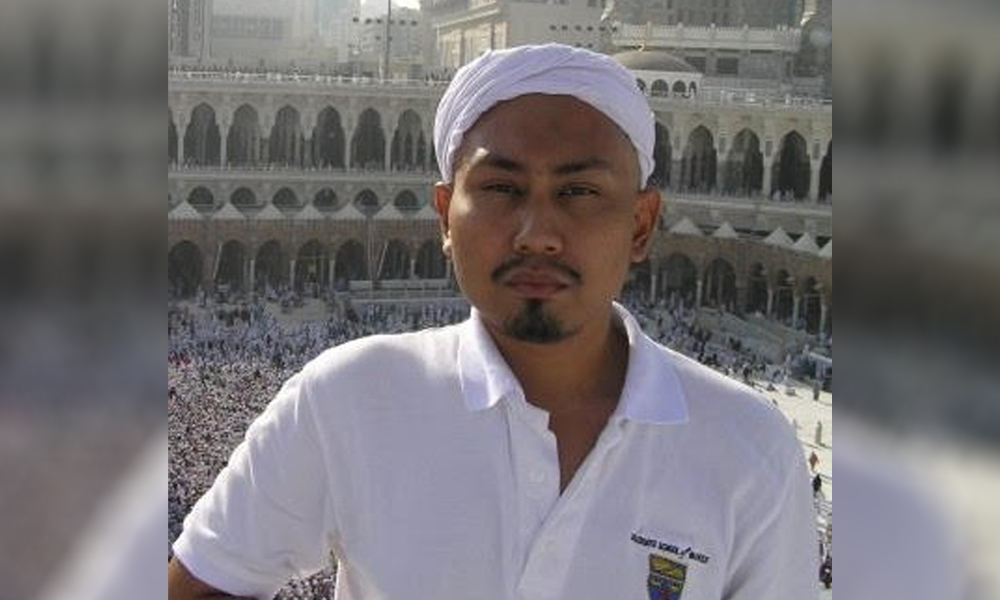
As pointed out by novelist Faisal Tehrani (photo) in a recent lecture, Islamic literature in the corpus of Malay language works are given greater prominence to the point they have become synonymous with national literature, relegating other genres, including more hybrid works to the side. 

This has resulted in Malay literature being divorced from its equivocal origins in the past few decades.

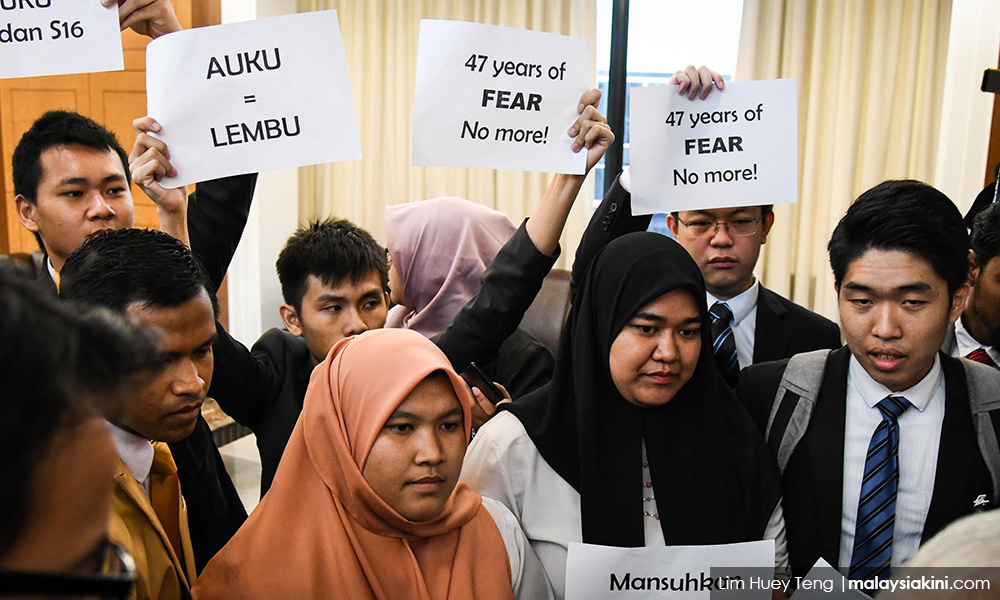
With this in mind, the amount of negative feedback that the Education Ministry has received on this proposal over khat, or Jawi calligraphy, has been pretty… khat-astrophic.

If one were to take a glance at Facebook comments, many users write about how the Jawi script belongs to Arabic culture, rather than a Malaysian one. 

A great deal of sentiment is rooted in the idea that this move is in tandem with the “creeping Islamisation” that continues to plague this country. 

Even groups such as coalitions in support of Chinese independent schools, Dong Zong and Jia Zong, have voiced their dissatisfaction, and were reported to have mobilised Tamil schools to take a similar position.

It might be easier to dismiss the fear of khat to be as irrational as the fear of crosses. But in reality, there is a persisting historical context that informs the controversy that this issue has garnered.

The miseducation of khat is inherently a part of Malaysia’s colonial legacy of language management to bring order to our multilingual society. 

In her book Taming Babel: Language in the Making of Malaysia, historian Rachel Leow highlights that the strategies employed by British administrators left a lasting impact on the social and political landscape of 20th century British Malaya.

As Bahasa Malaysia transitioned from Arabic to romanised script, the production of texts would also be shifted from manuscript to print form, for the ease of regulating the development of the language. 

The same had occurred with Chinese languages, resulting in incessant tensions in Malaysia’s communal relations. 

This would be further exacerbated by the “mentality of crisis” in postcolonial Malaysia, which wrangled with shaping Malay identity. 

Evidently, these events led to the continuous absence of recognising the plurality of languages in Malaysia, underpinned by a deep resentment of a diverse society.

It is certain that a lot of work needs to be done by the government of the day to adequately address the shortcomings of Malaysia’s national education system, especially because it has cost us racial harmony.

But as a young Malaysian who loves learning about history, I would like to remain hopeful about how this move can inspire agency among a younger generation of Malaysians to dig deeper into our history without the need of a handful of historians and linguists. 

In making ‘Malaysia Baru’, perhaps it is time to seek a sense of belonging that goes beyond what we have been told and ask ourselves – can we khat out all this fighting?

netuKINI 1# undi 18 and malaysia’s legacy of youth politics

OPINION  |  NETUSHA NAIDU Published: 24 Jul 2019, 8:12 am  |  Modified: 24 Jul 2019, 8:12 am

COMMENT | “Wait till you’re 21! Only then you can talk about politics! Now, whatever you say and think does not matter!” my cousin’s husband (at that time) angrily retorted at me. He was upset that I questioned the basis of his loyalty to the Malaysian Indian Congress (MIC).

I was disappointed that I didn’t get to find out how he could possibly make the case that a party so plagued by numerous corruption scandals was the only saving grace for the Malaysian Indian community. 

Our argument would come to an uninspiring end because my cousin interjected with “Okay, that’s enough political talk for now!”, seeing how embarrassing it was for her party guests to witness a 30-year-old man, a former political aide, get so riled up by her 18-year-old cousin.

Years down the road, I came to learn that “Wait till you’re 21” was a yardstick to determine the extent to which young Malaysians like myself could play a role in politics and nation-building.Advertisement

That little tiff had very much informed my understanding of youth political participation in this country. Our worth as political subjects was determined by the voting age.

So when July 16, 2019, happened, I saw it as a great blessing for Malaysians who are younger than me. Unlike me, they wouldn’t have to wait for their 21st birthday to be eligible to vote in the next general elections. 

Their hopes and dreams for the governance of Malaysia are now recognised. Upon turning 18, they are now going to be automatically registered as voters. They will even have the chance to stand as political candidates in their own right.

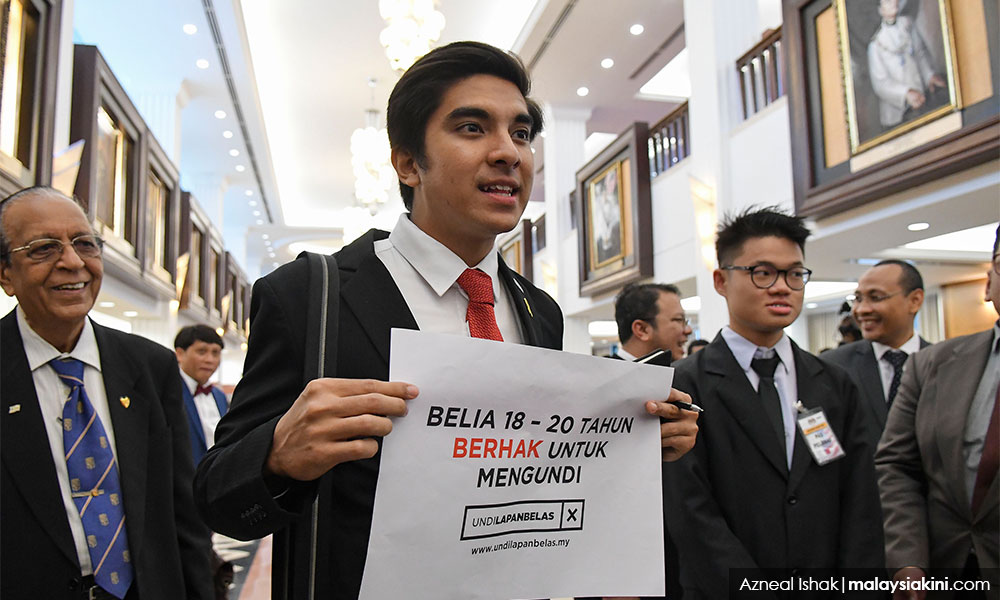
Now, this is what I would call a real conversation about “Malaysia Baru”. Thanks to the tireless efforts of Undi 18 campaigners, Qyira Yusri and Tharma Pillai, as well as the support of our Youth and Sports Minister, Syed Saddiq Syed Abdul Rahman (above), the 211 members of Parliament made a historic move to pass the Undi 18 bill, and amend the Federal Constitution.

This shows that Malaysian politicians on both sides of the divide, even in all their seniority, are in agreement that the youth need to be given more space in the democratic process. 

In spite of this, there are still members of the public who cannot help but have reservations about lowering the voting age. As I surveyed Twitter to find out why, it was disheartening to discover fears of young, naïve voters being courted by far-right nationalist or religious interests. While others described the possibility of a reduced commitment to policy-based reform, as one too many millennials are fixated on their own lifestyles. 

It was even more disappointing to find out that among those who hold such views are a number of 18-year-olds!

Such apathy must be addressed quickly if we are going to elevate political discourse in Malaysia. As my work with Imagined Malaysia has taught me, a lot of the anxieties that we experience in national politics can often be addressed by looking back into our past. 

Since we are now in a very exciting time as a country, it is important that young Malaysians critically engage in our own history. It will allow us to locate our own voice as political subjects and be able to root its legitimacy. That way, there wouldn’t be room for a logical fallacy, such as the legal age requirement being the only source of validation for youth political agency.

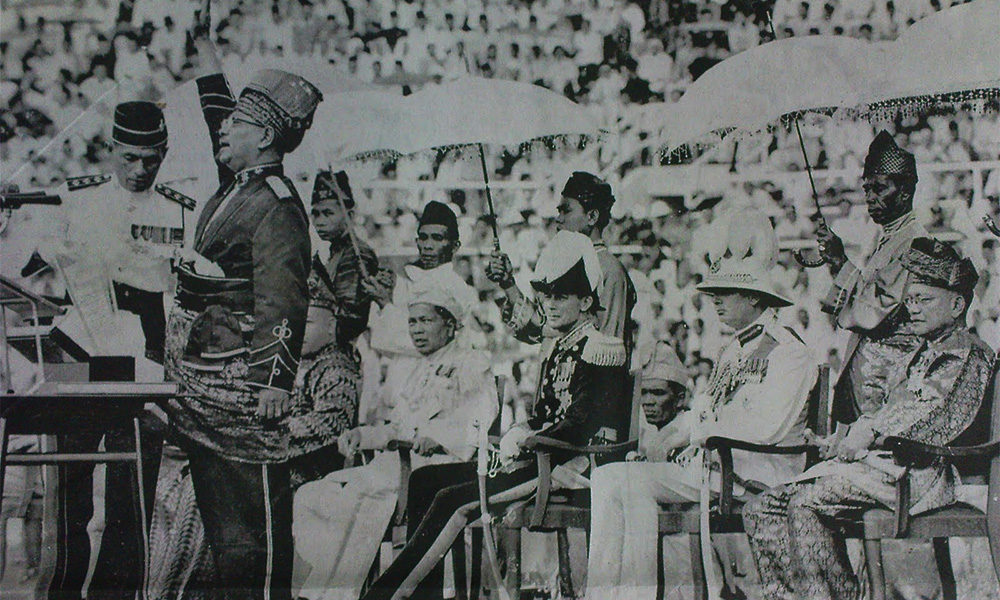
As a student of history, my greatest pet peeve about our official historiography has always been the exclusionary nature of what we call “the Merdeka narrative”. Postwar political parties such as the United Malays National Organisation (Umno), Malaysian Indian Congress (MIC) and Malaysian Chinese Association (MCA) consist of middle-aged British educated local elite. 

These men have come to be recognised as the founding fathers of Malaysia. Because their stories take centre stage in our school History textbooks, and they continue to be postulated as the sole victors building the nation, there is hardly any mention about the significant role played by youth in mobilising the desire for self-determination.

As a result, we have done a great injustice, not just to memories of youth movements in our past, but also to a fiery generation of scholars, activists and politicians who were once critics of the state of Malaysia’s education system and its paternalistic treatment of the youth. 

Throughout the course of Malaysia’s modern and contemporary history, there have been individuals who took part in the contest for power and influence that would formulate their idea of Malaysia as a “nation”. Many of whom were actually relatively young. 

It may be difficult to ascertain how many of them began their engagement in youth politics before turning 18, but there are two particular cases that I can think of that are very convincing.

One is the late Shamsiah Fakeh (above). In her memoir, she described her fervent pursuit of knowledge during her studies at the age of 16, under an influential Muslim reformist, Lebai Maadah.

In spite of not being able to escape the constraints of early marriage, Shamsiah continued to develop her political convictions, especially through witnessing the events that transpired during the Japanese occupation. 

A charismatic orator, she was later recruited into the country’s first Malay nationalist party, Parti Kesatuan Melayu Malaya (PKMM) and became the leader of its women’s wing in 1946. She was only 22 years old.

The second is P Veerasenan, the vice-president of the Pan-Malayan Federation of Trade Unions (PMFTU). While very little is known about him, this notable trade unionist continues to be remembered as an important mover in organising the 1940s labour movement in Malaya, alongside individuals like SA Ganapathy and Abdullah CD. 

Upon the banning of the PMFTU in 1948, Veerasenan was forced to hide to avoid arrest and deportation, although he eventually ended up being captured and killed. Veerasenan, too, was 22 years of age.

Yet, both Shamsiah and Veerasenan do not appear in the dominant memory of Malaysia’s political developments. Like the vibrant waves of student activism from the 1960s and right up to the 1990s, they, too, have been relegated to the periphery of our imagination. 

Narratives about these movements have been largely hidden from the public eye due to the narrow scope of political discourse dictated by those who claim authority. 

According to the political scientist Meredith Weiss, this phenomenon has been credited to Barisan Nasional’s governance. She described the regime as one that was a “rapidly consolidating, decreasingly liberal state” which dealt harshly with the movement, even as they sought to expand higher education to accelerate economic development.

While it is normal to have apprehensions about political immaturity in a time where democracy is facing a global decline, we shouldn’t be too quick to assume that the worst is about to come with this change. 

This is certainly the case when we contemplate the centrality of young Malaysians in determining a democracy that is healthy, thriving and inclusive. 

The philosopher Jacques Derrida said that democracy is inherently a concept that is constantly being challenged. It is often at odds with itself in an effort to continuously improve. 

Due to this, we are constantly working for “democracy to come”, where much of the hopes and dreams that inform our political developments rest on optimism that society and government are committed to positive changes in the present and future. Democracy is a destination that we are constantly journeying towards.

The contributions of young Malaysians have had a major impact in enhancing the role of civil society in shaping political discourse. If the 1940s to 1950s are examples that are too dated for one’s taste, then the fact that 41 percent of the voters during the 14th general election were between the ages of 21 and 39 should speak for the capability of youth to preserve Malaysia’s democratic welfare. 

So, Undi 18 is not just a spontaneous idea that emerged from nothing. It is an indisputable and inevitable product of Malaysia’s legacy of youth politics.