
it’s day 23 since malaysia has gone onto a full lockdown. i have not been the most productive and honestly, i am not sure how some people even do it. i’ve already written a long rant about it as an instagram post. anyway, the reason i am writing here again is not so much to lament my productivity, but i am seriously struggling to write an essay for my final module of the mphil. it’s called “language and power in early modern britain and the wider world”. i know right, what was i thinking that taking a course that suggests britain to be the centre of attention would be the most ideal but what attracted me to the module was its really diverse reading list. not only was europe the main interest, but our lecturer had included readings that discussed south asia and southeast asia too. the classes looked into gender, class and race informing the power relations produced by language politics. it’s a shame that the ucu strikes, coupled with my poor health and the pandemic meant that i had almost no opportunity to participate in this term.
but all hope isn’t lost. i still have this essay to write but i’m not sure how to get about it. the question assigned was
‘The study of rumour reveals more about authorities’ anxieties than popular consciousness’. Discuss.
if you’re wondering why i chose this over others, it was probably because it was the most open-ended compared to the other questions, of which i had little to respond to given i am no early modernist in any aspect of world history sksksks. i started off with getting into the readings that were assigned for this class. most of them discussed the role rumour had played in the mobilization of major political upheavals in the early modern period. in fact, one of the authors even suggested that rumour is an essential historical source to know what happened in the 1500-1700s. this seems to be true in the context what we were reading, such as the oxfordshire rebellion where the leaders of this event had utilized the townspeople in spreading news in the format of a grey area of truth: rumour. it was a pretty dense essay but insightful nonetheless.
it seems like the concept of rumour as a weapon of resistance is somewhat an established idea. i tend to think of james c scott’s study of malay society in sedaka as one particular example. he had even attempted to extend this theory in a book about “hidden transcripts”. it was kinda repetitive but it also lets you think about how communicating in the form of gossip and rumour destabilizes the power of the ruling authorities in particular moments of conflict. of course i am no stranger to this approach to the study of history. after all, my undergraduate dissertation makes use of newspaper reports as a medium of perpetuating “rumours” about the pahang civil war in 1891. but that’s the thing, this took place in the late 19th century not the 1500s to 1700s. southeast asia was so incredibly different from the way in which european and south asian history was, as recorded by the modern historian. could i have possibly found the same sort of recordation about peasant rebellions and other political upheavals in the same way ranajit guha would have examined in “the prose to counter-insurgency”? it seems like for the early modern life of asia, our political systems are not the same as in europe.
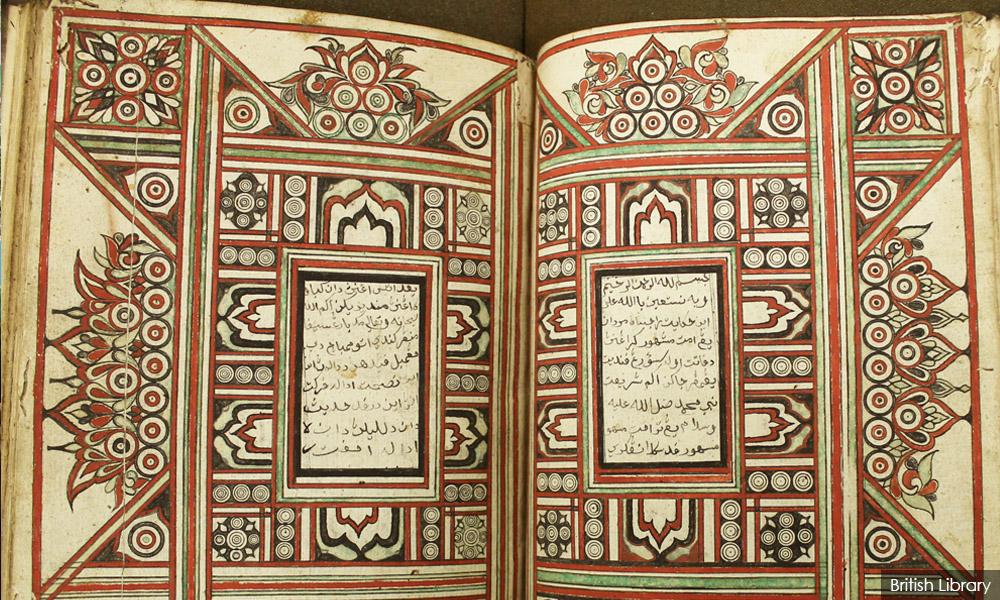
in the first place, traditional authority was still a major aspect of political life in early modern southeast asia and i don’t just mean maritime but also mainland. kinship and kingship forged power in ways that do not operate in the same logic as europe’s feudal system. and as a result, even our ways of recording the course of history was radically different. hikayats, babads, kiduns and other kinds of manuscripts feature as sources of history. although the intention of these texts is to preserve memories of a kingdom’s political developments, it is often interweaved with fantastical myths, magic and prophecies that aim to legitimize the mandate of such kings. even to this day, these are the texts that continue to be studied by historians of southeast asia when looking into the early modern period. as a result, i am compelled to think that if we were to study the role of rumour in early modern southeast asia, we cannot treat it in the same way as we do in subaltern and marxist historiographies as the subjects concerned play different roles in the tide of making history, as well as their representations. instead, rumour takes on a different form in this region. i’m not sure but would it be fair and accurate to treat the recordings of revelations, prophecies and miracles as alternatives to the word “rumour”? i cannot help but to think that this should be possible as rumours are always so contextual and manifest in different ways. i guess i could argue that revelations, prophecies and miracles are types of rumours that are prevalent in early modern southeast asia, especially in the malay world.
somehow, i felt that henk maier argued this best in the introduction of his book, “in the centre of authority: the malay hikayat merong mahawangsa”. i am so frustrated that i did not save a copy of the notes i took from sumit’s copy ughhhh!! there was this point he makes about the authority that is evoked by the religious overtones in the events that take place, while incorporating foucauldian notions of discourse and power. i guess it’s promising to have some premise to fall onto at least. so now that it seems like i have some grounding to argue that rumour has multiple dimensions and even more interpretations to make out of it.
actually, it was even funny and a little bit ironic that i came up with wanting to write about this because of langkah sheraton. the weird thing about that whole incident was that rumours of such a thing happening in the first place started almost after ge13! all the more it seems that rumour seems to be a primary force in malaysia’s political landscape so what more in early modern malay archipelago right?? well, not in the contemporary sense but it does feel like we could argue that myth-making is an essential aspect of rumour.
some of the case studies i’ve been spending a lot of time reading about include the ratu adil prophecy during the java war, where prince dipogenoro was the subject of many prophecies due to natural disasters like th eruption of mount merapi, or dreams of being declared the ratu adil in the first place. there’s a series of them known as the jayarabaya prophecies (if i spelt it correctly lol). what was interesting as noted by peter carey was that the dutch also noticed that prophecies have a central role in the collective organization of anticolonial rebellion and at some point, it was even suggested that the colonial administrators ought to pay for soothsayers and religious pundits to fabricate prophecies of the inevitability of dutch rule in java, if it meant that it would legitimize the annexation of java and other provinces in indonesia. that’s really wild. there’s also the whole debacle about the islamization of melaka which is really interesting. that story has been drummed into every malaysian student’s head since the beginning of time. it was funny that one malaysian historian had even pointed out this narrative being so “potent” in the making of our nation-state hehe. the idea that sultan mahmud shah woke up with his dick circumcised after prophet muhammad visited him in his dreams… what makes this whole thing so important was that it gave traditional authority an unquestionable position it seems.
taking all this into consideration, should i just center my discussion on hikayats and babads in general? it would appear to be a more feasible and realistic, probably truer to my own capabilities but honestly, even after all the readings i still got no juice and feel like i’ve not read sufficiently. either way, it looks like this writing exercise has been helpful for me to realize that i should concentrate on narrowing down hikayats and babads to look at, and to simply make the argument that traditional authority and its reliance on myth-making through the genres of hikayat and babad indicate that rumours actually do reflect more on authorities anxieties’ rather than popular consciousness. i am going to chat with a historian over zoom soon to narrow down my perspectives. so hopefully that helps!


 netusha naidu [ نتشا ]