my mphil research summary.

Contesting “Yawiness”: Negotiating Malay Nationalism on the Peripheries of Thailand and Malaya, 1909 – 1960


Introduction

This study seeks to ask if there was an invention of “Yawiness” that genuinely represented the national consciousness of Thai Malays in ways that could not be represented by modern Malay nationalism. “Yawiness” can be described as a hybridized sense of identity that was a product of cultural, political and social tensions between “Malayness” and “Thainess”. This study proposes to investigate how its manifestation can be seen in the unrealized aspirations of Gampar (Gabungan Melayu Pattani Raya or the Greater Patani Malay Association) to “re-join Malaya” when the Federation of Malaya gained independence in 1957 (McCargo, 2012:2).


A brief historiographical context

One of the most important contributions to the study of identity and territoriality in Thailand since its pre-modern past is Thongchai Winichakul’s Siam Mapped: A History of the Geo-body of A Nation. In this book, Winichakul conceptualized the discourse of Thainess to be existing within the “geo-body” of Thailand. The “geo-body” is where the premodern, indigenous conceptions of space in the Siamese kingdom are rendered ambiguous due to the introduction of modern technologies by colonial conquests in Southeast Asia. As a result, new geographical knowledge in Thailand is faced with a ‘twofold task’: to emphasize the differences between modern and indigenous understandings or to make sense of their ambiguities and co-exist (Winichakul, 1994:59).


Besides discussing the preservation of the Thai geo-body, Duncan McCargo addresses the question of “un-Thainess” in his book, Mapping National Anxieties: Thailand’s Southern Conflict. According to McCargo, the collective fear of territorial loss to Malay Muslims is formulated by “evoking historical myths to suggest a narrative of humiliation and vulnerability” (McCargo, 2012:1). Much of this fear stems from a Thai Buddhist identification of “separatists” tendencies in the cultural, religious and social practices of Malay Muslim life (McCargo, 2012:116). He finds that Malay Muslims are quite ambivalent towards “Thainess”, leaving them with empty and meaningless choices between “separatism” and “loyalty” in regards to their relationship with “Bangkok’s political and cultural authority” (McCargo, 2012:127). As a result, McCargo hints at the historical continuity encapsulated by the notion of “Thainess” which is being discursively challenged by “Malayness”.

Patrick Jory takes the notion of Thainess further by paying attention to the contesting discourses of Thainess, pan-Malayanness, Islamism and the more particular “Melayu Patani” identity that is rooted in the memory of the former Patani sultanate (Jory, 2007:257). He makes close reference to the Malay historiographical tradition, particularly the text, “Hikayat Patani” (The Story of Patani). Based on the text, he highlights the lack of antagonism between the Siamese kingdom and its tributary, Patani, as well as the minimal mention of Islam and Malays in describing the relations between the realms (Jory, 2007:259). This compels him to conclude that the radicalism of militants is inevitably “a logical outcome of the denial of Patani Malay identity and the difficulty involved in fully accepting mainstream Thai identity” (Jory, 2007:277).


It is this historically constituted tension between “Malayness” and “Thainess” that does not seem to be captured as much in seminal works like Siam Mapped when attempting to articulate the political grievances in southern Thailand today. Instead, this tension focuses on demonstrating how the discourse of Thai political history is “structured on the loss and preservation of its territory”. Consequently, this has affected representations of the origins of “separatism” in southern Thailand (Aphornsuvan, 2004:2-3). In spite of the many cultural, social and political similarities shared by Malays and Thais, the relationship between these two groups are “characterized” by misunderstandings and fear. This might explain why “territorial nationalism and the remembrance of past wars” are central to a Thai Malay sense of belonging. At the same time, the tension between two essentialist notions of identity represent he ambiguities on the shared peripheries as “destructive sources of potentially violent conflict” (Jenne, 2014:169)


Research questions

In Prasenjit Duara’s review of Siam Mapped, he posed the question: “Does the geo-body acquire its meaning simply from its territorial delimitation, or also from a racial conception at its core?” (Duara, 1995:479). Similarly, Renard suggests that in order to define the minorities of Thailand today, there ought to be a conception of the “Other” in Thai culture that dates back to the beginning of this process in the ancient kingdom of Ayuthayya (Renard, 2006:300-301). It appears as if it is not just a contestation of two essentialist forms of “Thainess” and “Malayness” (McCargo, 2012:124). Instead, there is a certain level of particularity due to the geographical ambiguity that surrounds the Malay Muslims of Patani. As Gilquin has pointed out, the Yawi language of Patani Malays has a “specific cultural context and worldview” combined with a “powerful attachment to Islam”. Unlike its Malay-speaking counterparts in British Malaya and the Dutch Indies, the political consciousness of Patani has not secularized itself from its glorious past as a centre of Islamic scholarship by holding on to Yawi and a Thai-Malay brand of Islam (Gilquin, 2005:54).


A study to investigate the emergence of “Yawiness” is highly relevant to developing a better understanding of the national consciousness of Thai Malays. However, an understanding can only be achieved by comparing it to the advent of “Malayness” propounded by its bordering neighbour West Malaysia, formerly known as the Federation of Malaya. It can be seen that the secessionist ambitions of Gampar were inspired by the development of a modern, anti-colonial Malay nationalism in Malaya. It has been mentioned that aspirations to “re-join Malaysia” were mooted in the 1950s, but were ignored in the lead-up to Malaya’s independence (McCargo, 2012:2). Such contrasting visions of “Malayness” should be explored to find out how they have informed the attitudes of the leaders of a newly independent Malaya towards the liberation struggle of Malays in Southern Thailand and the development of the discourse of “Yawiness” as a separatist worldview.


Research methodology

To examine questions surrounding the concept of “Yawiness”, this study will compare the development of Malay nationalism in British Malaya and Thailand after the signing of the Anglo-Siamese Treaty of 1909 up to the establishment of the Federation of Malaya following independence in 1957. Besides analyzing relevant historical documents such as letters, photographs, treaties, maps, and political statements, this study will be guided by the longue durée perspective. The basis of this approach is the concept of an episodic history (histoire événementielle) which takes into account of the existence of “social continuities, the multiple and contradictory temporalities of human lives” (Braudel and Wallerstein, 2009:173). This would be useful to analyze the ideological “turning points” of political movements in Southern Thailand (Braudel and Wallerstein, 2009:174).


Bibliography

  1. Aphornsuvan, T. (2004). Origins of Malay Muslim “Separatism” in Southern Thailand. Asia Research Institute (ARI) Working Paper Series, 32, 1-52.
  2. Braudel, F. and Wallerstein, I. (2009). History and the Social Sciences: The Longue Durée. Fernand Braudel Center Review, 32(2), 171-203.
  3. Duara, P. (1995). Reviewed Work: Siam Mapped: A History of the Geo-Body of a Nation by Thongchai Winichakul. The American Historical Review, 100(2), 477-479.
  4. Gilquin, M. (2005). The Muslims of Thailand. Chiang Mai: Silkworm Books.
  5. Jenne, N. (2014). Reviewed Work(s): Preah Vihear: A Guide to the Thai-Cambodian Conflict and Its Solutions by Charnvit Kasetsiri, Pou Sothirak and Pavin Chachavalpongpun. Contemporary Southeast Asia, 36(1), 168-170.
  6. Jory, P. (2007). From Melayu Patani to Thai Muslim: The spectre of ethnic identity in southern Thailand. South East Asia Research, 15(2), 255-279.
  7. McCargo, D. (2012). Mapping National Anxieties: Thailand’s Southern Conflict. Copenhagen: NIAS Press.
  8. Renard, R. D. (2006). Creating the Other Requires Defining Thainess against Which the Other Can Exist: Early-Twentieth Century Definitions. Southeast Asian Studies, 44(3), 295-320.
  9. Winichakul, T. (1994). Siam Mapped: A History of the Geo-body of a Nation. Chiang Mai: Silkworm Books.
netuKINI #2 neither arabisation nor creeping islamisation, just a khat-astrophe

OPINION  |  NETUSHA NAIDU Published: 8 Aug 2019, 6:41 am  |  Modified: 8 Aug 2019, 6:41 am

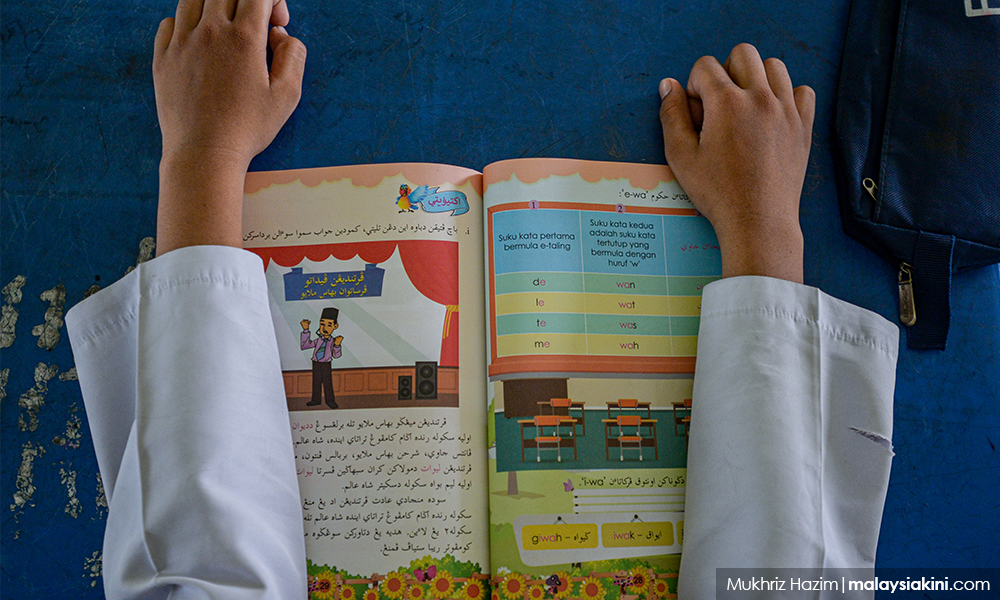
COMMENT | I am in full support of khat being taught as part of Malay language education in national schools.

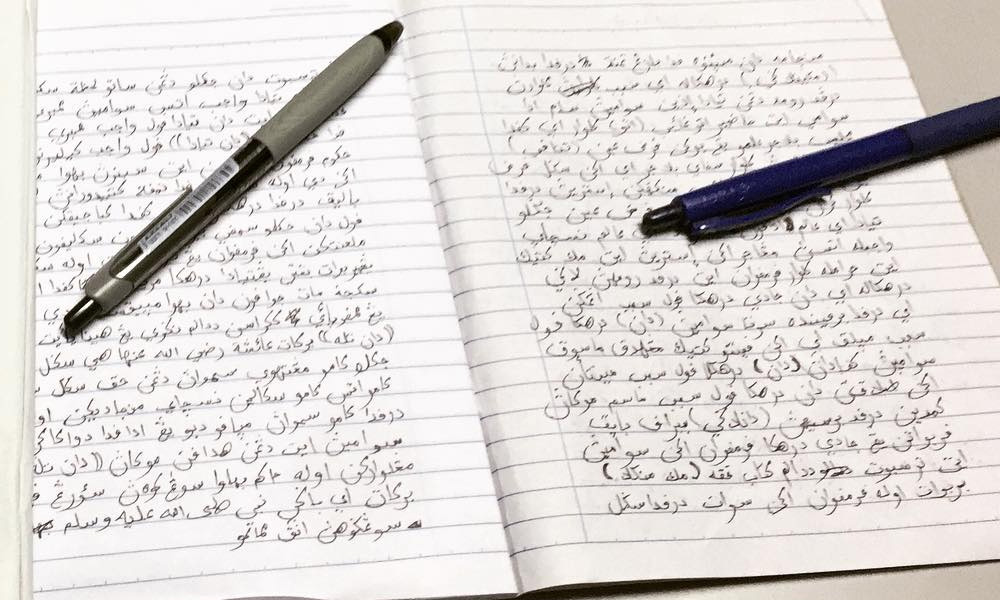
Before I began my undergraduate studies, I decided to enrol in a one-day introductory workshop on the Jawi script, its history and romanisation of the Malay language. 

I recall the wide-eyed amazement of the facilitators, who were young Islamic studies scholars. 

“It’s rare for non-Malays to come by our centre these days unless they are researchers from abroad. We are happy that you have decided to join us today,” one of them warmly said.Advertisement

For me, it was always very fascinating to find out more about the overlap between the Malay and Arab worlds because of its rich intellectual and cultural diaspora. 

My interest in Jawi started developing since my schooling days. This was because I realised that many prominent Malay intellectuals, dating back to as far as the 13th century, wrote their contemplations in Jawi. 

Yet, this indigenous philosophical tradition had been rendered quite invisible in our everyday conversations about Malaysian intellectual history.

It was from this workshop that I learnt various scholars have concurred that Jawi writing is a product of the legacy of Islam and the Arabic language spreading across the Malay Archipelago. 

The inability to separate Islam from Jawi stems from a commonly held notion that Arabic remains superior to other forms of language in the region due to its status as the language of the Quran.

The most popular held notion about the origins of the Jawi script is the one propounded by the venerated Islamic philosopher, Syed Muhammad Naquib Al-Attas. 

According to him, Jawi was directly derived from Arabic, introduced by Arab missionaries of Hadrami origin without any intermediaries such as Persians and Indians.

It was from this moment on, I found myself determined to learn more about Malaysia’s past through Jawi manuscripts. During my second year in university, I enrolled in a module titled ‘Understanding the Malay World’, taught by my mentor, Sumit Mandal. 

Eager for me to practice my newly acquired reading skills and knowledge of Jawi, he encouraged me to undertake a research project on a Malay manuscript of my choice. I selected the title Hikayat Syah Mardan.

The purpose of my study of this text was to explore intercultural connections that go beyond the modern-day borders of Malaysia and Indonesia.

As I furthered my study of this 17th-century Malay manuscript, it dawned on me that the understanding of the Jawi script and its origins I was previously taught was not set in stone. 

In fact, there is a vast amount of literature that continues to challenge the exclusive ‘Islamic’ nature of literature written in Jawi.

Through a detailed analysis of Hikayat Syah Mardan, I discovered that it was quite difficult to pin down the tale’s origins to a single place. 

Similar narratives and characters have been found in places like India and Indonesia, Thailand and Vietnam, making this manuscript a testament to more complex social dynamics taking place in the Malay world during this period.

An even more interesting discovery was that this hikayat demonstrates how Hindu-Buddhist motifs take centre stage in creating an effective narrative about its protagonist’s spiritual advancement. 

This led me to conclude that pedagogical Islamic teachings that were being expressed in Malay society were dependent on older, persisting literary conventions that belonged to the Hindu-Buddhist history of our nation. 

Without them, profound lessons of courage, humility, wisdom and love would have been lost in translation.

These findings forced me to reconsider the extent to which Malay manuscripts are exclusively framed within the conventions of the Arabic language, and monolithic Islamic ideals. 

Was Hikayat Syah Mardan an anomaly in the vast array of Malay literature? Surprisingly, it isn’t! 

Southeast Asian historian Ronit Ricci’s examination of The Book of One Thousand Questions revealed that notions such as “creeping Islamisation” or “Arabisation” do not truly capture the transformative process in religion and culture that took place in Southeast Asia. 

Instead, she uses the word “Arabicised” to describe how Arabic influenced local languages by “combining with them rather than by replacing them.”

Ricci demonstrates this by showcasing variations of the book in Javanese (Serat Samud), Malay (Kitab Seribu Masalah) and Tamil (Ayira Macala). 

Through her study, it became evident that the literary tradition of Southeast Asia was “richly interconnected both with a distant past and with a local present” in order to create and maintain a shared sense of identity between Muslims and non-Muslims alike.

Yet, it appears that such a conception of traditional Malay literature has become marginalised.

As pointed out by novelist Faisal Tehrani (photo) in a recent lecture, Islamic literature in the corpus of Malay language works are given greater prominence to the point they have become synonymous with national literature, relegating other genres, including more hybrid works to the side. 

This has resulted in Malay literature being divorced from its equivocal origins in the past few decades.

With this in mind, the amount of negative feedback that the Education Ministry has received on this proposal over khat, or Jawi calligraphy, has been pretty… khat-astrophic.

If one were to take a glance at Facebook comments, many users write about how the Jawi script belongs to Arabic culture, rather than a Malaysian one. 

A great deal of sentiment is rooted in the idea that this move is in tandem with the “creeping Islamisation” that continues to plague this country. 

Even groups such as coalitions in support of Chinese independent schools, Dong Zong and Jia Zong, have voiced their dissatisfaction, and were reported to have mobilised Tamil schools to take a similar position.

It might be easier to dismiss the fear of khat to be as irrational as the fear of crosses. But in reality, there is a persisting historical context that informs the controversy that this issue has garnered.

The miseducation of khat is inherently a part of Malaysia’s colonial legacy of language management to bring order to our multilingual society. 

In her book Taming Babel: Language in the Making of Malaysia, historian Rachel Leow highlights that the strategies employed by British administrators left a lasting impact on the social and political landscape of 20th century British Malaya.

As Bahasa Malaysia transitioned from Arabic to romanised script, the production of texts would also be shifted from manuscript to print form, for the ease of regulating the development of the language. 

The same had occurred with Chinese languages, resulting in incessant tensions in Malaysia’s communal relations. 

This would be further exacerbated by the “mentality of crisis” in postcolonial Malaysia, which wrangled with shaping Malay identity. 

Evidently, these events led to the continuous absence of recognising the plurality of languages in Malaysia, underpinned by a deep resentment of a diverse society.

It is certain that a lot of work needs to be done by the government of the day to adequately address the shortcomings of Malaysia’s national education system, especially because it has cost us racial harmony.

But as a young Malaysian who loves learning about history, I would like to remain hopeful about how this move can inspire agency among a younger generation of Malaysians to dig deeper into our history without the need of a handful of historians and linguists. 

In making ‘Malaysia Baru’, perhaps it is time to seek a sense of belonging that goes beyond what we have been told and ask ourselves – can we khat out all this fighting?

writing for an art gallery: am i getting it right?

trigger warning: self-harm, suicide. please skip over the sentences that are strikethrough if it triggers you.

it’s really been a while since i wrote about what more exciting research i have been up to lately. besides dumping excerpts that i found interesting here, i have not really had the juice to talk about my writing process.

i was in quite a dire state in the past few weeks and well, it was fucking terrible! i found this fat-ass lump below my armpit and made my boob look so funny. before getting it checked out by a breast surgeon, my mind went completely ape-shit cray. literally was like – omg i am going to die from breast cancer, what is the point if i am suffering so much etc. i attempted suicide with an incredibly blunt knife (stupid, i know lol) and then later, tried to muster the courage to overdose with antidepressants. but my plans got foiled when my best friend came knocking on my door ferociously and just as ferociously cuddled me until i was calm and my boyfriend arrived to take over.

sorry to start off with a very dark episode, but this is why i am writing here in the first place. this is my safe space where i do not get judged for my terrible experiences. anyway, if you are ever feeling the same way, i just want you to know that i am still alive today because i made it a point to cry out for help from my boyfriend before i took my own life. but maybe faith had something to do with it. i use that knife to cut literally everything and it could barely even leave a scar on my skin?! maybe there is a god that operates on optimistic contingencies.

now that i have discovered i just have axillary breast tissue that is easily treatable with evening primrose oil, i am starting to feel myself again. today i got some good vibes channeled in. after a few nights of crying myself to sleep, i woke up looking at my body and feeling not as overweight as i was moments ago, and wearing a top i just bought (and completely ripped in the first wear… wtf zalora give me my refund rn so gg).

i guess the recovery started yesterday, when i bumped into one of my lecturers, peter. he asked how i was doing with my dissertation. i told him i am so incredibly overwhelmed i can’t even breathe (yes really, i was suffocating due to anxiety spells). peter replied, “that’s okay, just know that you aren’t going through this alone. it will all be over soon and you will be flying high – i say that because i believe you truly deserve it”. #uglycrying

it was also my last class with my mentor today. he bought us cake and we talked about joel s. kahn’s critique of cosmopolitan practice of malay-ness in malaysia, a part of the last chapter in his seminal book, “the other malays”. what a bittersweet moment. but i will probably write some other time about how sad it is to part with sumit since he is like the supportive dad i never had in my childhood uwu.

so like, this is not the main point i am typing right now. i am really excited to write a short essay for an upcoming exhibition titled “rediscovering forgotten thai masters of photography” in malaysia. i cannot say which gallery it is but my essay is going to be featured in the exhibition catalogue! this is my first commissioned work for an art gallery. i have never worked with such material and was pretty hesitant to do so at first.

basically, this exhibition was previously in singapore. it has been described as the following:

Rediscovering Forgotten Thai Masters of Photography gathers images taken in Thailand during the 1950s to 1970s by seven photographers Buddhadasa Bhiku, Liang Ewe, S.H. Lim, Saengjun Limlohakul, Pornsak Sakdaenprai, ’Rong Wong-Savun and M.L. Toy Xoomsai. By assembling these bodies of works, the project offers conjectures on film photography and ethnographic lines of inquiry. The 247 remastered prints potentially survey photographic traditions at the onset of Modern Thailand, suggesting views such as celebrity and cosmopolitan life alongside inland societies and the periods antecedent to Thailand’s tourism in the 60s.

i am not really into visual arts theories but thanks to the approaches we were exposed to for this year’s module, sites of asian interaction, i was bursting with ideas when the curators shared the pamphlet of photographs. i was particularly mesmerized by the studio photographs by a sino-thai man, liang ewe who set up a studio in phuket. it was actually a photo of two malay women dressed in what looks like a localized version of the chador, and in black from head -to-toe. i guess what really struck me was that this image of the two women represented a fundamental issue with our understanding of the presence of malay-muslims in thailand.

credit: Sriwanichpoom, M. (2015). Rediscovering Forgotten Thai Masters of Photography. Bangkok: Kathmandu Photo Gallery.

i gotta admit that i am kinda shook that historically phuket also had a reasonably large malay population due to the tin rush but i did not come across it at all in studies about thai malays. studies on thailand’s malay population are so centered on “the 3 provinces”, that being yala, narathiwat and patani – this has major implications on our approach. does this mean that majority of scholars on thai-malay studies unconsciously localize (and inherently essentialize) malays into the modern nation-state’s demarcation and alienation of the community? is this to reinforce narratives of “the deep south”? i think this is why of all the photographers featured in this exhibition, it was liang ewe that caught my interest the most. this is because this photo most definitely breaks a very rigid narrative about how malays are concentrated in the violent, unstable southern region. in a way, it has also caused us to unknowingly legitimize the extreme end of thai nationalism, which perceives the otherness of malays in thailand. having these women photographed is a visual evidence that phuket was a cosmopolitan space and continues to have a lasting legacy that challenges homogeneity in thai nationhood. i liked how manit sriwanichpoom puts this:

If the photo showed a man wearing a Chinese tunic, a Muslim headdress or a Sikh’s turban it does not mean he wasn’t a Phuket native; the island had seena thriving mining industry for over a hundred years, and seekers of its fortunes have not only been local Thai people but those of various nationalities. They came to the island and settled-in over generations to become fully ingrained whilst keeping a mixed cultural inheritance. So if you ask which is the local, the answer would be: all of them.

besides that, phuket has a really large population of baba-nyonyas! they came from penang to do business and enjoy the fervour of the tin-mining boom. some other studio photographs that sriwanichpoom collected include peranakan women in traditional regalia as well as wedding portraits! which is why for this essay, i really want to demonstrate how these photos function as “archives of hybridity”. i would like to examine them as a gateway to understanding the type of cultural and commercial exchanges that were happening before they were conceived as transnationalism. more importantly, i want to share the importance of preserving liang ewe’s photographs as a means of collecting social memory of the cosmopolitan practices in thailand, and its intimate connections with our current conception of the malay world.

i would like to think that what i am writing is very important work, but we shall find out if it is of standard two days from now. anyway, i guess i can’t compress much into 1.5k words for the catalogue. but i am delighted that i managed to convince sumit to let me expand this for our final research essay, which means i can come up with more analysis and shed more light on this underrated collection of photographs. i look forward to sharing the final product on my academia.edu page. will definitely share it here too!

pax!