i cannot tell you who wrote this to me. but i am so glad i had someone tell me this sometime ago. i need to revisit more often. now that i am in a very difficult time of my life. i am also nearing the end of my studies. i have about 10 days to write the rest of my dissertation up.
wish me luck.
I understand. It seems to me that you are facing the prospect of burn-out, which is a common malady among scholars the world over. But in all such cases, including my own, re-building borders and boundaries seems the best practical way out of the mess.
I had to deal with a useless father as well, but the fact is that there was never any closure between me and him until he died, so it took me some time to realise that i had to live with the fact that there would be no conclusive end to that narrative.
When you say that you feel the same as the ‘fragile Netusha from 4 years ago’, that is the key to your predicament- You are stuck in that past and you need to draw a boundary between the past and the present. We all deal and react to depression differently and some of us choose to ruminate and mull over things past again and again, in search of some narrative that can give a meaning to it all.
That is not going to happen, and you need to accept that. You going back to that past will only conjure it up again, like some demon , and it will return to haunt you in the present. There is no need to do this, but it also means that you need to seriously ask yourself why you are and have been torturing yourself- do you hate yourself, or feel you dont deserve happiness?
These are questions that you have to ask and your answers need to be clear and short and only then can there be some clarity.
At present though your ship seems to be leaking all over, so the main thing to do – in practical terms – is to plug the biggest leak, and that seems to be the absence of a boundary between past and present. You have to root yourself in the here and now- The Netusha of 4 years ago is no longer here, so why do you bring her back? She’s back there somewhere, doing her own things, so leave her be. To know how far you have come, and how far away that past Netusha is, think of how far you have gone and how great the distance is between you (now in the present) and she (back in the past) is. You are now in academia, you are working well, you are going to contribute a chapter to our book, you will get published. These are things you need to take account of now, in the here-and-now.
Every society has notions of ghosts and spectres, of haunting and possession- These are just narratives about memory and the past coming back into the present. Draw the line and tell the Netusha of 4 years ago that you have moved on, and if she wishes to follow you then it has to be on your (present) terms, and not her terms from the past.
Boundaries are important, as is being rooted and focused.
i’ve feeling very low lately until i recalled this essay i wrote for a book that never materialized. it was supposed to be reflections of malaysian experiences in iran for the first time. i wrote something really personal and raw to me. when i look back at it, i am reminded of a kind of vibe that i cannot relate today. it is indeed strange. have i grown that much? or am i just out of touch with my own feelings?
either way, this piece will never see the light of day in print form. but i guess it is worth being put here to serve as a reminder of my journey towards healing. persian poetry has played a major role in my mental health from the philosophical perspective. now that i have pieced that together (or somewhat i think), i am now onto the second aspect, which is the medical recovery. anyway, if you are reading this and feeling low, i just want you to know that spiritual self-connection is essential to coping with depression. yes, it is a medical problem but from my experience, it can be a very overwhelming philosophical burden too. this is because it engages with the purpose of existence, the will for optimism and the vitality that resides within intimacy. here’s a spectre of my depression’s past.
From Khayyam to Hafez and the Healing of a Broken Heart
One of my most favourite paintings are by the early 20th century book illustrator, Edmund Dulac. These are from his interpretations of the Rubaiyyat of Omar Khayyam.
Introduction
“As far as you can avoid it, do not give grief to anyone. Never inflict your rage on another. If you hope for eternal rest, feel the pain yourself; but don’t hurt others”.
The Rubaiyat of Omar Khayyam
Every time I think of this quote, I am reminded that it is often difficult to actually avoid inflicting grief upon others. After all, aren’t human beings so fragile and vulnerable to the contingent tide that we have immersed ourselves in? Every time I think of this quote, I am reminded that eternal rest may not be the destiny for all us as long as we are restless souls. After all, aren’t human beings so fragile and vulnerable to the point we succumb to wherever the currents of our grievances may take us?
Such were the thoughts of a 16 year old girl in the suburbs of Seremban. She was often tired, sullen and pessimistic about the future as the voices in her mind and around her say, “This isn’t good enough”, “Geez, you screw up everything” and “You’re such a freak of nature”.
There’s more from where that came from, and it would be the book of verse she held in her hand that could give her the kind of solace that nothing else could. It was the Rubaiyyat of Omar Khayyam, as translated by Edward Fitzgerald. She would spend her evenings perusing quatrain after quatrain, while imagining herself in the painted universe of Edmund Dulac’s Persia. Some days she walked through a garden of roses, while on other days she sat beneath the moonlight as she rejoiced the love of the divine Beloved, or so she desired. There was a strange, enigmatic energy that came from reading the Rubaiyyat. It was like there was a promise of attaining a peace of mind that she was destined to keep.
My first encounter with Omar Khayyam was somewhat arbitrary. It was an accidental stumble while flipping through the pages of the Reader’s Digest Illustrated Encyclopaedia in the library of my home. I was looking for suggestions of new poetry to read and given that I was exposed to only English literature, I was eager to learn the poetry from different parts of the world and find something that I could connect with beyond the sonnets of Shakespeare. It was at this spontaneous moment that I found myself puzzled by the line,“A Book of Verses underneath the Bough/ A Jug of Wine, a Loaf of Bread – and Thou”. It was indeed puzzling, given that the first thought that arose was, “A wine-drinking Muslim? Impossible in Malaysia”. Perhaps that was what attracted me to Khayyam in the first place – unconventionality and unconformity. He would render the world, the universe as ultimately uncertain and dismiss the arrogance of thinking minds that believed its knowledge to be in the grip of their palms. He wrote;
Why, all the Saints and Sages who discuss’d Of the Two Worlds so wisely – they are thrust Like foolish Prophets forth; their Words of Scorn Are scatter’d, and their Mouths are stopt with Dust.
Myself when young did eagerly frequent Doctor and Saint, and heard a great argument About it and about: but evermore Came out by the same door where in I went.
With them the seed of Wisdom did I sow, And with mine own hand wrought to make it grow; And this was all the Harvest that I reap’d ‘I came like Water, and like Wind I go’.
The Rubaiyat of Omar Khayyam
At first impression, Khayyam’s existentialism might render one to feel hopelessness but for an exhausted young soul, it might be a remedy to dealing with the worldly polemics surrounding oneself. This is because I felt there was some sort of peaceful rest with knowing that I did not know or control everything, and through knowing this, there is acceptance of a certain order of things. However, I am still granted with the agency of mind and body that I possess. My hand will nurture and harvest Wisdom that is mine own. I knew I came like Water, and like the Wind I will go. To Khayyam, Life is a journey from one destination to another, and the accumulation of wisdom is the purpose and antidote to surviving it.
Thus, this would be the ideal that I held on to in the midst of bitterness and alienation. By 17, I suspected that it was clinical depression. It was meant to be kept a secret, at least for a while. Distraction helps keep the lingering sadness at a distance. So does seeking solace in Khayyam’s whimsical, rebellious yet profound poetry. This would serve as the marker of Persian poetry as an essential part in the healing a broken heart.
Marching on, without moving on
In spite of coming from almost halfway across the world, there was something oddly relatable about Persian poetry. No one could explain the reason for this better than Arp and Perrine in their introduction to “Sound and Sense: An Introduction to Poetry”. To them, poetry is inherently universal and ancient. We do not give great importance to poetry only because we derive tremendous pleasure from reading, listening or reciting it. Poetry, in its totality, could be regarded “as something central to existence, something having unique value to the fully realized life, something without which we are spiritually impoverished”. Poetry, for me, had become a necessary sustenance in my mental life. As the world continues to make an assault to my senses, I do think, once in a while, that I have beguiled myself with the pursuit of an intellectual life. So much so, a false consciousness had blanketed me from the occasional weavings of sorrow. Like medicine, reading poetry acted as a remedy to an illness that leaves the patient with the impression that she was healing.
But I was wrong.
By this time at 21 years old, I had delivered two TEDx presentations, moderated several public forums, been a young columnist at a popular news portal and manage my own alternative history project called Imagined Malaysia. Success may have followed me wherever I went, but so did the void, which is my illness within. During this time, the words of Jalal al-Din Rumi, another very popular Persian poet and scholar, would help fill the emptiness. In a way, it felt like Rumi was the wine that poured and overflowed the heart, a very thirsty Cup. His words strung together so beautifully, emboldened with yearnings for love, peace and light. Rumi’s words were the bricks of my imagination – a fantasy of life being a celebration in the sheer mundanity that often consumed my mind. He carried a sense of cherishment, adoration and optimism that would make me so envious. Rumi asked;
“There is a candle in your heart, ready to be kindled. There is a void in your soul, ready to be filled.
You feel it, don’t you?”
Jalāl ad-Dīn Muhammad Rūmī
I replied, “Yes, I do. Very much so”. Later, I found that he asked me again in the midst of frustration, “If you are irritated by every rub, how will your mirror be polished?” Life had brought in greater challenges to cope with, in the forms of finances to family bonds that were close to being severed. How would I, so riddled with the monkey chatters of my distress, ever be able to handle such great irritations in a state of vulnerability? He assured me, “The wound is the place where the Light enters you”. Without a doubt, reading Rumi felt more like a conversation with an enlightened soul as he had the most comforting responses to the most discomforting thoughts plaguing my mind.
It was a constant struggle to be coping in this cyclical wave of emotions, but I was determined to survive it and hence why, Rumi and Khayyam would be the spiritual nourishment that provided a sense of optimism in my life. I had hoped someday, I would be able to visit the land of these brilliant poets. My Iranian friends, whom I could derive my knowledge and aspirations with, spoke of a great many ideas and tales of people, culture and politics. However, it had never occurred to me that the opportunity to visit, to experience Iran in its urban totality would arrive so soon.
Is this Iran? Or is this Iran?
I would be going to Tehran for a study trip on Iranian culture, society and history, thanks to Professor Syed Farid Alatas, a well-known Malaysian sociologist that would be an important anchor in my progressing intellectual life. Although, to me, he became more like a pillar of paternity – a father, an advisor and a friend. With a vintage edition of the Rubaiyyat in my hand (and anti-depressants on the other), I ventured on a new travel experience. In spite of having to constantly assure people that I will be returning alive and in one piece, it did not interrupt my optimism and openness to learning about a place completely different from where I would come from.
I would be honest and say that I did internalize some Oriental imaginings of Iran before visiting – mostly of mysticism. However, much of it changed as the landscape began to shift, transform and solidify in the hands of our surrounding counterparts. This mysticism was not apparent as I anticipated it to be. Rather, it appeared more bureaucratic, hierarchical and regimented. Our hosts were exemplary, kind and hospitable but intriguingly, they were also the contemporary defenders of the Iranian Revolution. They were the face, the mind, the guardians of the Islamic Republic of Iran and its struggle for authority and religion. From where we stood in this visit, I figured that our experience of the country was to be crafted by the spirit and ideological underpinnings of its establishment. Iran, in these eyes, is a monolithic universe – Shi’ism is its language of resistance and obedience is their guarantor. Not that there is anything wrong with it, but I have always been slightly uncomfortable with the journeys to nationhood as histories of the world have been written. In our imaginings to belonging to a single, unified political and social community, gaps are often left behind as everyday life is so often an entanglement of different realities and fantasies. All the chaos that is reduced to the ‘national’ often gets lost in translation. In the case of a place like Iran, in all of its magnanimity, there was a familiar sense of uncertainty, of incomprehensibility in spite of her spokespersons’ assurances.
The lines between truth, reality and fantasy felt somewhat blurred in their narratives of the world (it must be because I am still not convinced that there is a Jewish conspiracy for world dominance). Although, the anxiety of being pushed into the periphery because of American- led globalization comes from a historical and contemporary rationalization of international relations. Perhaps that is what makes Iran such a fascinating country today for so many – it is either painted as a despotic project, and for some, deviates from the original intention of a revolution against the Pahlavi dynasty, while for others, such as myself, are longing to experience the enigmatic ‘soul’ that resides deep within a nation of such rich heritage. No amount of laws, customs, ethics and dogma could conceal the complexities of Iranian diaspora – whether it was its people, their government and history. To me, the most innate and irrepressible element is its ethereal poetics, constantly expressed in cultural and religious activities with such aestheticism. These poetics is wittily exuded by Iran’s irreplaceable intellectual and artistic heritage, particularly their poets. After all, did not this journey of healing a broken heart begin with Persian poetry? I bare witness, for I knew, and I sighed, similarly to Hafez, to the motherland:
“Your heart and my heart are very, very old friends.”
The Divan of Hafez
A book of verse in my hand, towards the abandonment of my sacred shrine
Initially, I could not be too sure about where would I find the answers of healing. Was the healer a book, a person or a moment? Was it subtle or boisterous? Was it effective or ineffective? These questions often muddled a critical, overwhelmed mind like mine but I reminded myself to completely immerse myself in Iran to truly appreciate and learn from her. This was when the healer appeared. He was coy, playful yet harboured a deep longing for the Beloved so much so, it could be somewhat melancholic. Oh, Hafez! How you have changed my mind, and these sweet, precious moments!
Our first encounter was at the Iranology Foundation in Tehran, which was hosting us for the celebration of Yalda Night, which is basically the Iranian winter solstice festival. Yalda celebrates winter’s coming, and the dawn of a new day that marks the light’s victory over darkness. There was something particularly special about the entire ritual – every articulation was a symbol and metaphor for the recurring theme of Yalda, the battle against negativity and the restoration of harmony and goodness. In homes, Iranian families would stay up all night long to brave the night’s evil forces, while munching on pomegranates, watermelons and nuts. Even though we were not exactly at someone’s house, we got a pretty good idea of what were the activities that entailed Yalda, particularly the people’s source of entertainment. They would recite and discourse on Hafez’s poems together. Observing Faal-e Hafez, meaning Hafez Omen, would be the most significant event of that night for me.
Traditionally, each family member makes a wish and the eldest of them will be asked to randomly open a page of the poetry book and read it aloud. The meaning expressed in the verses of the poem serves to signify the interpretation of the wish and how it will come true. For this occasion, however, trinkets belonging to people were placed in an urn, and as random verses of Hafez are read out and defined, the trinket that is incidentally picked out would imply Hafez’s prophecy would happen to the person who owns the trinket. I listened carefully as his playful, whimsical and sacred reflections are read out beautifully in Persian, and translated into English for our understanding. His words filled the air with a sense of wishful thinking as the melodious voice of his reciter, a mature and elegant Persian lady giggles when sharing Hafez’s thoughts on love and life. Some of them predicting future romances, successes as well as difficult times that promise perseverance. We laughed, we teased, we jived, we astounded. This sense of communion was hardly felt on most days. What I found most delighting was that this ignited feeling of comradeship has spiritual connotations. It was an unexplainable sensation of unity that was brought about by our openness to new possibilities of thinking about ourselves and the people around us. In this moment, I heard Hafez say:
“Even after all this time, The sun never says to the earth, ‘You owe me.’ Look what happens with A love like that. It lights the whole sky.”
The Divan of Hafez
Such a moment reminded me of the need for kindness. More often than not, kindness is neglected in pursuing of our esoteric desires. Kindness, as what I have learnt from my captivation for Hafez, is an essential characteristic of Love. To be kind is to be loving. A kindness that sees no colour, no age, no differences. A kindness that is all-embracing and mighty can move people’s Love towards the divine Beloved. This must be the healer’s secret to mending jaded hearts and minds. For I was convinced in Yalda Night that Hafez the healer, can teach me some lessons on expressing Love in the form of kindness, and permitting me to forgive and let go of all my worries, my judgments.
I want to love as if I want to light the whole sky and never think of owing. I want to be the Sun, and spread a love that vanquished the dark. I want to be kind.
***
“Qom?! Seriously? What is wrong with you, Netusha?”
My Iranian-British friend exclaimed in a text message. We seemed to garner similar reactions from other Iranians when we told them that we were going to visit the religious capital of Iran, Qom (pronounced with a deep, guttural tone). It was surprising given that we were being presented with an Iran which has a strong fixation for distinguishing the sacred from the profane. Evidently, this constructed image of the nation would find itself shaken and vulnerable to collapse so easily. Nonetheless, coming from a country which vilifies Shi’ism as a vulgar deviation from Islam, it is perhaps necessary for us to encounter and experience the spiritual life of devout Muslims so different from ours. I, for one, not being able to sympathize with such reservations, found it even more thrilling to experience sacredness of a society so different from mine. Having been to a Sunni mosque, churches of many denominations and even Native American rituals, but the one thing that had always seem so ‘other’ for Malaysians today must be this.
I learnt that Qom would be known as the birthplace of the Iranian Revolution. This was because Ayatollah Khomeini spend most of his life in this city during the period of the revolution, besides being exiled in France. Indeed, Qom is fascinating and intellectually vibrant in its own way. A walk along the pavements would be a sea of women clad in flowing black chadors (a body-length veil) and men, who appear elegant and scholarly in their clerical robes, the labbaadeh and qabaa, as they hold on to books in one hand. Qom was also home to many important historical archives that belong to the Shi’ite community. “They guarantee to the rest of the world that we have a long, sacred history. It is for our continuity”, said a cleric to us as we toured the Ayatollah Mar’ashi Najafi Library, the third largest centre for Islamic manuscripts in the world. This scholarly environment still failed to reveal the essence of the city. I was keen to see what drew so many seminarians, religious tourists and pilgrims to this place. The reason would be that several magnificent shrines of the Twelver Imams and their relatives belonged in Qom. One of them was Fatimah Masumeh, sister of the eight Imam Reza and the daughter of the seventh Imam Musa al-Kadhim. In Shi’ite Islam, women are revered as saints if they are close relatives to the Twelver Imams. Every year, thousands of Shi’ite Muslims visit Fatimah Masumeh to honour her and seek her blessings.
We walked with much anticipation across a long stone bridge, approaching two minarets overseeing a monumental golden dome. As I came closer and closer to the honourable Fatimah, I witnessed grieving women caressing her tomb. They cried hysterically and chaotically, as if they lost one of their own loved ones. The pilgrims mourned, calling out to her, “Fatima, oh Fatima!” Some even collapsed to the floor, their wailing faces flat down as tears streamed. It was indeed a moment that left me perplexed and dumbfounded, as I did not understand what drove them to experience such immense grief. What had happened to Fatima that was so tragic? I later learned that something terrible had happened to Fatima. She paid a detrimental cost for her bravery and loyalty to the Imams. In 201 A.H., Fatima died during travels with her brother Imam Ali al-Rida in Khorasan. Their enemies attacked her caravan, killing many of her family members. She was then poisoned by one of the women from the enemy’s side, fell ill, and returned to Qom to die. Fatima’s fate is devastating for her followers, even after hundreds of years. The shared sense of loss that was amplified in the building was somewhat magical to me, as I felt the collective historical trauma that is carried by whole communities, similar to that of Jews. Does this sentimentality trace across Abrahamic traditions? I could not be certain. These lamentations over injustices inflicted upon different peoples are not easily forgotten, especially in the advent of intense marginalization. The hysteria was hardly relatable, but it struck my heart strings as I realized the legitimacy of Faith and the proclaimed suffering of communions. On a more transcendental level, it speaks of the ethereal feeling that is shared with diverse memories of different believers. Hafez suddenly came to mind, as I struggle to rationalize the moment;
I have a thousand brilliant lies For the question: How are you?
I have a thousand brilliant lies For the question: What is God?
If you think that the Truth can be known
From words,
If you think that the Sun and the Ocean Can pass through that tiny opening Called the mouth, O someone should start laughing! Someone should start wildly Laughing Now!
The Divan of Hafez
This episode reminded me of the “thousand brilliant lies” we often tell ourselves about the universe. We would like to think we have the answers to all our questions, but there has always been a different colour and expression to everything that we believe in. It is in this very moment that I remembered that faith in the Beloved is riddled with anxiety. I say it is this way because as we try to categorize and comprehend our surroundings and actions, to consider them as holy and unholy, we easily cast doubt upon ourselves as contradictions reveal themselves unexpectedly. Echoing Rumi, Hafez too, said:
“I have learned so much from God that I can no longer call myself a Christian, a Hindu, a Muslim, a Buddhist, a Jew.
The Truth has shared so much of Itself with me that I can no longer call myself a man, a woman, an angel, or even a pure Soul.
Love has befriended me so completely it has turned to ash and freed me of every concept and image my mind has ever known.”
The Divan of Hafez
Although, there is something very comforting yet unnerving about contingency in faith. It is inherently a paradox that enforces both security and insecurity on different occasions in our lives, as we are constantly divided and united with a multiplicity of narratives. I am terrified of the unknown and the fact that I cannot wrangle with contingency, but these esoteric moments are beginning to illustrate the reasons I could finally be at peace with it. It is the only way a broken heart can be healed. It compelled me to recall historian Farish Noor’s lecture on the contingency and ethics in religion. He mentioned a significant historical event in the Quran that perfectly argues against our peculiar readiness to control and define the boundaries of faith – the moment of revelation to Muhammad (peace and blessing be upon him).
In the course of Muhammad’s recitations, he met the Angel, a messenger of God. The Angel asked Muhammad to recite. Muhammad seeming confused asked, “Recite what?” What do you wish me to recite?” The Angel said, “Recite in the name of God that created humankind from a cloth of blood”. Noor said he found this exchange intriguing because it demonstrates that at the very origin of Islam, that being the moment of revelation, uncertainty is already at the naval of existence. In the lecture, he said, “This is not the Year Zero of Islam. This is the Second Zero of Islam. At the moment of the revelation, there is uncertainty. You do not know what God wants and you cannot understand. You cannot have the foreknowledge of the radically Other”. In the heart of Islam, Faith is in a muddy confluence of ambiguities, displaying faith in its “rawest form”. For us to have Faith, we have to also accept that we are taking a chance as there are risks and varying possibilities. “There is no certainty to communicate with God”, he said. “To communicate with the radical Other, that which is radically outside the economy of the same, the familiar, the human”. Thus, contingency has always, and will always be, central to Faith.
Such a notion rendered me speechless, but gave me an answer to set to my own beginning. At first, I did not understand why it knotted my stomach and left me breathless. Perhaps it was an epiphany. It crushed everything I thought I knew about faith. I now know for sure that I know nothing. How startling! How could someone be so sure that God existed but what truly frightened me was how could I be so certain that God did not exist? Was I a fool for having no faith in the Beloved’s presence? Am I a coward for being afraid of having Faith? This anxiety compelled me to surrender to life’s contingency. As pilgrims wept and kneeled in front of Fatima, I figured that I ought to embrace the beauty and willingness of faith. I could try to surrender to something so great, that it was above and beyond everything I knew.
Conclusion
I’ve come a long way from where I’ve began, only to find means to have a new beginning. Iran has granted me some enormous gifts through the lessons derived from these exquisite moments. Without a doubt, if I wanted to spiritually heal, I would have to immerse myself in the Persian philosophy of life – to simply let go. A salient reminder of this came from Hafez:
What do sad people have in common? It seems they have all built a shrine to the past And often go there and do a strange wail and worship. What is the beginning of Happiness? It is to stop being so religious like that.
The Divan of Hafez
To live in the present, is to essentially be happy. When someone like me, has grown so devoted to a sacred shrine like my past, I want to belong to a new sacred shrine – Love. It is undeniable that from the beginning itself, the answer has always been Love. It is up to me, to embrace and discover the Lover, the Loved and the Beloved within me. My gratitude goes to Iran, as she gave me the opportunity to know how I will heal this broken heart. From Khayyam, Rumi to Hafez, to these moments of camaraderie symbolize that the cultivation of self-love is the Love that is connected to the divine Beloved, the Merciful and Compassionate. As for all that humanity has been able to attain, I, in my lifetime, will never be certain of who speaks to my broken Heart.
Sources
While writing this essay, I benefited mostly from my readings of Omar Khayyam, Jalal ad-Din Rumi and Hafez. I am also greatly indebted to Elif Shafak’s book “The Forty Rules of Love” which served as the bedrock of my inspiration to write this essay. The poems by Khayyam, Rumi and Hafez were from the following sources: 1 The Essential Rumi: New Expanded Edition (2004), translated by Coleman Barks. Published by Harper One. 2 The Rubaiyat of Omar Khayyam (2010), translated by Edward Fitzgerald. Published by Arcturus Publishing Limited. 3 The Divan of Hafiz. Selections of modern translations were found here: http://www.azquotes.com/author/37991-Hafez
^ that was my spin-off of shangela’s retort to mimi imfurst during rupaul’s drag race: untucked.
no tea, no shade but… it really annoys me when people who claim to be marxist spend more time accusing others of not being loyal enough to the ideas that marx (and inherently the russian intellectuals that came much later) and thus, that makes them more “true to the cause” of overthrowing capitalism. it’s not a drag race where we need to out-glam[marxist] each other to get to the top. in fact, if marxists spend more time reading all aspects of marxist literature, they would probably have less time to berate other people for being too academic. just be honest and admit that you lack the ability to respond to the complexities of ideology and praxis.
honestly, this is a very petty issue which i don’t really give two fucks about. i mean of course it annoys the hell out of me when young socialists want to use my intellectual labour when they need to demonstrate to the rest of the world that they are trying to educate “the masses” (whatever that means, i don’t really like the usage of that term). but later if i have something to say about their approaches, i am “not allowed” to comment because i “don’t go on the ground with them”.
err…. okay.
tbh i don’t define myself as a marxist. but i do strongly believe in socialism as a great way to address so many inequalities that we are experiencing in society. i’m intersectional though, so i really don’t think i can ever be dogmatic about marxist and socialist theories. it’s just an idea, why treat it like it’s religion??
anyway, this whole thing resurfaced in my mind recently after watching slavoj zizek and jordan peterson debate on marxist and capitalist approaches to happiness.
i loike this comic it’s so funny uwu
i wasn’t never really a fan of zizek, but i really enjoyed listening to his responses to peterson. he was really sharp and articulate, not to mention really accessible. i particularly enjoyed the fact that they agreed with each other on a lot of issues that today’s Left is facing such as addressing political correctness, postmodern emptiness and the obsolete nature of stage theory.
i was watching the debate with my boyfriend. i could never watch this by myself without getting bored or drift off to sleep (i’m getting old don’t judge). plus, it helps that we pause the video occasionally for him to insert commentary so that i get a little bit more contex to what zizek was referring to. yes, he is quite a fan of zizek.
i’m still not a fan of zizek (well maybe for now), but i kinda think that i lack the intellectual capacity to appreciate philosophy. sometimes i am unsure if it is really that or that generally philosophers are really shit at communicating their ideas…. then you wonder why a wanker like jordan peterson is so well-loved in the first place. gg.
this is all just a little ramble because i am fucking exhausted. i had a panic attack last night because i got 64/100 for my policy brief. FUCK!!!! i am so broken rn. i don’t really feel confident about final year and let’s not even go to my dissertation…. *cries in multiple languages*
anyway, my boyfriend shared this really insightful quote from foucault.
Michel Foucault (1980). Power/Knowledge: Selected Interviews and Other Writings 1972-1977. Colin Gordon (ed.), Colin Gordon, Leo Marshal, John Mepham and Kate Sober (trans.). New York: Pantheon, p. 52-53.
the reason i really liked it too is i seriously feel that people need to stop treating marx’s works like it is a religious text. it has become an established concept in the realm of ideas, what we really need now is to develop it more and more, creating more discussion about the shape of capitalism today, and diagnosing the symptoms of alienation.
stopping here, check out the quote below!:
I often quote concepts, texts and phrases from Marx, but without feeling obliged to add the authenticating label of a footnote with a laudatory phrase to accompany the quotation.
As long as one does that, one is regarded as someone who knows and reveres Marx, and will be suitably honoured in the so-called Marxist journals.
But I quote Marx without saying so, without quotation marks, and because people are incapable of recognizing Marx’s texts I am thought to be someone who doesn’t ‘t quote Marx…
When a physicist writes a work of physics, does he feel it necessary to quote Newton and Einstein? He uses them, but he doesn’t need the quotation marks, the footnote and the eulogistic comment to prove how completely he is being faithful to the master’s thought.
And because other physicists know what Einstein did, what he discovered and proved, they can recognize him in what the physicist writes.
It is impossible at the present time to write history without using a whole range of concepts directly or indirectly linked to Marx’s thought and situating oneself within a horizon of thought which has been defined and described by Marx.
One might even wonder what difference there could ultimately be between being a historian and being a Marxist.
finally got my grade back for my field notes assignment! but i am not happy with my marks. i know that 68/100 is a decent mark but still… it was just field notes!!! how could i have screwed it up?? maybe i am being too hard on myself since i was not even sure about what i was supposed to do. the feedback suggests that i did not do enough to tie my observations together. i guess this must be true as i was concerned about doing too much in 1000 words. i guess i should have not hold back!
Netusha,
This is a very good set of field notes because it makes a sufficient number of relevant observations that cluster around the question of “mukmin” (faithfulness, perhaps). However, it starts off with observations that seem a little disconnected, such as the architecture of the building and the area. Still, the quality of the observations that do cluster around faithfulness are very good.
nonetheless, i had a great time working on this assignment. i actually enjoyed visiting the bookstore one more time, but this time to collect as many observations as i could. it gave me the opportunity to have a greater appreciation of pustaka mukmin and its role in shaping the hybrid landscape of masjid india, kuala lumpur.
On the 22nd of March, I visited a bookstore named Pustaka Mukmin (KL) Sdn. Bhd. located in Tuanku Abdul Rahman (TAR) street, Kuala Lumpur. As seen in Figure 1, the facade of the building has been painted a lighter shade of magenta and navy blue accents. Many of the shophouses in TAR street were built before World War 2 and thus, the facade of the bookstore is very consistent with elements of neo-classical architecture such as a Palladian-inspired parapet, window frames and the Renaissance-inspired ornate dome (Ho, Hasan & Noordin, 2005).
Figure 1. Facade of Pustaka Mukmin along Jalan Tuanku Abdul Rahman. Photography by Netusha Naidu
Pustaka
Mukmin is located on a street with persisting historical roots, better known as
Jalan TAR, it remains a popular shopping area. Flanked by buildings of similar
pre-war architecture, these shophouses have been transformed into modern
retailers selling a wide range of products, especially fabrics and textiles.
The
signboard on the first floor states “PEMBORONG BUKU AGAMA” above its name,
which means “wholesaler of religious books”. The signboard on the second floor
of the building states “KEDAI BUKU DAN ALAT TULIS” which means, “book and
stationary store”. It is coupled with the logo of Oxford Fajar, the Malaysian
branch of Oxford University Press. This was probably done to advertise the bookstore’s
collection of the company’s publications and attract a prestigious reputation
among its patrons.
Etymology and history of Pustaka
Mukmin
According
to Pustaka Mukmin’s owner, an Indian Muslim man named Haji Ishak, the bookstore
is a family business that was established in 1970. He explained to me that the
bookstore attempts to cater to all sorts of readers as a means of maintaining
the business. “Whatever people would like read, we will order. It is good for
business”, he said in a soft-spoken tone. Haji Ishak mentioned that they pride
on their extensive networks with publishing houses of Islamic texts outside
Malaysia, including countries such as the United Arab Emirates, Saudi Arabia,
Indonesia and India.
A
particularly interesting aspect of the bookstore begins with the name itself.
On one hand, according to the 2nd edition of Dewan Bahasa dan Pustaka (DBP)’s
Malay language dictionary, the word pustaka
originates from Sanskrit and can be defined as the following: (a) a
compilation of papers that are bounded together; (b) a book that contains
predictions of the future; (c) library and (d) a place that stores reading
materials (PRPM, 2017a). On the other hand, the word mukmin originates from Arabic term for “believer” or “faithful
Muslim” as stated in the holy Quran
(PRPM, 2017b). However, as described by practicing Muslims I have encountered, mukmin is often used to refer to men and
women who are distinguished from other Muslims due to having complete
submission to Allah.
Observations and conversations in
Pustaka Mukmin
Upon entering Pustaka Mukmin, I first noticed the large banner of neon-red fonts contrasted against black, at the back of the bookstore’s ground floor. It states “BUKU AGAMA DAPAT HARGA BORONG & RUNCIT” which translates to “religious books at wholesale and retail price”. Such emphasis might indicate the desire to make Islamic texts more affordable and therefore, more encouraging for the surrounding Muslim community to cultivate a holistic Islamic way of life. This is further reinforced by an extensive array of supplements that were prominently displayed at the front of the store (see Figure 2). Some products included honey, herbs, arabic gum, henna hair dye, kohl eyeliner and zamzam water. When I asked Haji Ishak about where they were acquired from, he mentioned that they were purchased from third party agencies that imported these products from various parts of India and the Middle East. Other items that featured near the entrance of the bookstore include tasbih (prayer beads), rehal (book rest for the Quran), nasheed (vocal music) albums, audio lectures by preachers and skullcaps.
Figure 2. Inside the first floor of the bookstore. Photography by Netusha Naidu.
Examples of religious books that were put on display include on Islamic jurisprudence, commentaries on the Quran and hadiths as well as Islamic history and philosophy. However, these were not the only type of books to dominate the shelves of Pustaka Mukmin. In fact, there were also books that aim to address mental health from an Islamic perspective, motivational and lifestyle books authored by Islamic preachers, Malay language romance novels, biographies of political activists such as Malcom X and Malala Yousafzai, commentaries on Malaysian politics and conspiracy theories that were inclined to anti-Semitism. Most of the books available were in Malay, but there was also at least three to four shelves were for books in English.
Figure 3. A group of young Singaporean Malay women shopping at the bookstore. Photography by Netusha Naidu.
Figure 4. Bookshelf of translated versions of the Holy Quran accompanied by commentaries. Photography by Netusha Naidu.
Haji Ishak mentioned that patrons of the bookstores are not just locals, but also come from Singapore, Saudi Arabia, Syria and Iraq. Fortunately, I managed to speak to a group of young Singaporean Malay girls (Figure 3). One of them said she frequently visited the bookstore several times when she was much younger. When asked what compelled her to come back to Pustaka Mukmin in particular, she mentioned that she appreciated the wide range and variety of books that were available. “In Singapore, due to restrictions on the circulation of books, there are very limited choices in obtaining Islamic texts”, she added. In spite of the bookstore mostly catering to Malay-language readers, she was convinced that Pustaka Mukmin offered more options for translations of the Holy Quran from Arabic to English, as shown in Figure 4.
A room of a mukmin’s own
The purpose for an establishment like Pustaka Mukmin might be in aiding preparation for the Hajj. This is seen in the range of books in Figure 5, that includes a well-acclaimed meditation on the enigmatic experiences of the pilgrimage to Mecca by Iranian scholar, Ali Shariati.
Figure 5. A copy of “The Hajj” by Ali Shariati. Photography by Netusha Naidu.
Pustaka Mukmin can be regarded site that is constituted by manifold Muslim networks in a transnational religious economy. The goods available at Pustaka Mukmin are acquired through trade relations that extend beyond the boundaries of Malaysia. Consequently, the richness and diversity that encompasses Pustaka Mukmin makes it a site of multiple interactions and scales as several interlocutors, from Haji Ishak himself, to import agencies and publishing houses abroad. As a result, this amalgamation formed a localized environment that promotes a mukmin’s lifestyle.
trigger warning: self-harm, suicide. please skip over the sentences that are strikethrough if it triggers you.
it’s really been a while since i wrote about what more exciting research i have been up to lately. besides dumping excerpts that i found interesting here, i have not really had the juice to talk about my writing process.
i was in quite a dire state in the past few weeks and well, it was fucking terrible! i found this fat-ass lump below my armpit and made my boob look so funny. before getting it checked out by a breast surgeon, my mind went completely ape-shit cray. literally was like – omg i am going to die from breast cancer, what is the point if i am suffering so much etc. i attempted suicide with an incredibly blunt knife (stupid, i know lol) and then later, tried to muster the courage to overdose with antidepressants. but my plans got foiled when my best friend came knocking on my door ferociously and just as ferociously cuddled me until i was calm and my boyfriend arrived to take over.
sorry to start off with a very dark episode, but this is why i am writing here in the first place. this is my safe space where i do not get judged for my terrible experiences. anyway, if you are ever feeling the same way, i just want you to know that i am still alive today because i made it a point to cry out for help from my boyfriend before i took my own life. but maybe faith had something to do with it. i use that knife to cut literally everything and it could barely even leave a scar on my skin?! maybe there is a god that operates on optimistic contingencies.
now that i have discovered i just have axillary breast tissue that is easily treatable with evening primrose oil, i am starting to feel myself again. today i got some good vibes channeled in. after a few nights of crying myself to sleep, i woke up looking at my body and feeling not as overweight as i was moments ago, and wearing a top i just bought (and completely ripped in the first wear… wtf zalora give me my refund rn so gg).
i guess the recovery started yesterday, when i bumped into one of my lecturers, peter. he asked how i was doing with my dissertation. i told him i am so incredibly overwhelmed i can’t even breathe (yes really, i was suffocating due to anxiety spells). peter replied, “that’s okay, just know that you aren’t going through this alone. it will all be over soon and you will be flying high – i say that because i believe you truly deserve it”. #uglycrying
it was also my last class with my mentor today. he bought us cake and we talked about joel s. kahn’s critique of cosmopolitan practice of malay-ness in malaysia, a part of the last chapter in his seminal book, “the other malays”. what a bittersweet moment. but i will probably write some other time about how sad it is to part with sumit since he is like the supportive dad i never had in my childhood uwu.
so like, this is not the main point i am typing right now. i am really excited to write a short essay for an upcoming exhibition titled “rediscovering forgotten thai masters of photography” in malaysia. i cannot say which gallery it is but my essay is going to be featured in the exhibition catalogue! this is my first commissioned work for an art gallery. i have never worked with such material and was pretty hesitant to do so at first.
basically, this exhibition was previously in singapore. it has been described as the following:
Rediscovering Forgotten Thai Masters of Photography gathers images taken in Thailand during the 1950s to 1970s by seven photographers Buddhadasa Bhiku, Liang Ewe, S.H. Lim, Saengjun Limlohakul, Pornsak Sakdaenprai, ’Rong Wong-Savun and M.L. Toy Xoomsai. By assembling these bodies of works, the project offers conjectures on film photography and ethnographic lines of inquiry. The 247 remastered prints potentially survey photographic traditions at the onset of Modern Thailand, suggesting views such as celebrity and cosmopolitan life alongside inland societies and the periods antecedent to Thailand’s tourism in the 60s.
i am not really into visual arts theories but thanks to the approaches we were exposed to for this year’s module, sites of asian interaction, i was bursting with ideas when the curators shared the pamphlet of photographs. i was particularly mesmerized by the studio photographs by a sino-thai man, liang ewe who set up a studio in phuket. it was actually a photo of two malay women dressed in what looks like a localized version of the chador, and in black from head -to-toe. i guess what really struck me was that this image of the two women represented a fundamental issue with our understanding of the presence of malay-muslims in thailand.
credit: Sriwanichpoom, M. (2015). Rediscovering Forgotten Thai Masters of Photography. Bangkok: Kathmandu Photo Gallery.
i gotta admit that i am kinda shook that historically phuket also had a reasonably large malay population due to the tin rush but i did not come across it at all in studies about thai malays. studies on thailand’s malay population are so centered on “the 3 provinces”, that being yala, narathiwat and patani – this has major implications on our approach. does this mean that majority of scholars on thai-malay studies unconsciously localize (and inherently essentialize) malays into the modern nation-state’s demarcation and alienation of the community? is this to reinforce narratives of “the deep south”? i think this is why of all the photographers featured in this exhibition, it was liang ewe that caught my interest the most. this is because this photo most definitely breaks a very rigid narrative about how malays are concentrated in the violent, unstable southern region. in a way, it has also caused us to unknowingly legitimize the extreme end of thai nationalism, which perceives the otherness of malays in thailand. having these women photographed is a visual evidence that phuket was a cosmopolitan space and continues to have a lasting legacy that challenges homogeneity in thai nationhood. i liked how manit sriwanichpoom puts this:
If the photo showed a man wearing a Chinese tunic, a Muslim headdress or a Sikh’s turban it does not mean he wasn’t a Phuket native; the island had seena thriving mining industry for over a hundred years, and seekers of its fortunes have not only been local Thai people but those of various nationalities. They came to the island and settled-in over generations to become fully ingrained whilst keeping a mixed cultural inheritance. So if you ask which is the local, the answer would be: all of them.
besides that, phuket has a really large population of baba-nyonyas! they came from penang to do business and enjoy the fervour of the tin-mining boom. some other studio photographs that sriwanichpoom collected include peranakan women in traditional regalia as well as wedding portraits! which is why for this essay, i really want to demonstrate how these photos function as “archives of hybridity”. i would like to examine them as a gateway to understanding the type of cultural and commercial exchanges that were happening before they were conceived as transnationalism. more importantly, i want to share the importance of preserving liang ewe’s photographs as a means of collecting social memory of the cosmopolitan practices in thailand, and its intimate connections with our current conception of the malay world.
i would like to think that what i am writing is very important work, but we shall find out if it is of standard two days from now. anyway, i guess i can’t compress much into 1.5k words for the catalogue. but i am delighted that i managed to convince sumit to let me expand this for our final research essay, which means i can come up with more analysis and shed more light on this underrated collection of photographs. i look forward to sharing the final product on my academia.edu page. will definitely share it here too!
found this short excerpt from a paper that discusses the complexities in defining national culture due to transnational flows and intimate ties between neighbouring nation-states like indonesia and malaysia. i liked that while this paper is mostly meant to contribute to the body of international studies, it is quite rare to encounter papers like this that are deeply informed by scholarship from malay studies.
the excerpt i share here is interesting to me because it argues that the notion of budaya a.k.a. culture for malays is essentially rooted in the desire to remain grateful to what the status quo provides. that is quite a conservative definition that legitimizes the order of malaysian cultural politics. this is reinforced by what i assume is an etymological formula?¿
budi (being grateful) + daya (force) = budaya (culture)
this is so fascinating yet insidious to me. i am probably biased due to my innate belief that culture is anarchic and the site of resistance. and so, this interpretation goes against my principle head-on. i hope to revisit this in the near future as i am quite keen to look at a deeper philosophical discussion on culture in malaysia, especially since that is what shapes socio-political approaches to malayness and malaysianess.
Chong, J. W. (2012). “Mine, Yours or Ours?”: The Indonesia-Malaysia Disputes over Shared Cultural Heritage. Sojourn Journal of Social Issues in Southeast Asia, 27/1:1-53
In the subject of the Malay culture, a further argument has been advanced by Wan Norhasniah Wan Husin (2011), who contends that the Malay culture is predicated upon the concept of budi (loosely translated as “being grateful”) that existed prior to the arrival of Hinduism in the region. Wan Norhasniah Wan Husin’s (2011, p. 133) illustration of the strong association between budi and the Malay culture is particularly significant to issues of kinship and cultural affinity in the Malay World:
Budi is spiritual [and] sometime referred to as the soul; while daya is reflected in physical actions. It is a combination of the words budi and daya known as budaya or culture that shows manifestation of the action of the Malay soul or the traditions of the Malay. The upmost aim of budi is to uphold peace and harmony in their relationship with others. It is permanent in nature, but has dynamically undergone various transformations to suit the ever-changing environment. If there were external elements that suit the core aims of budi, they will be assimilated, however budi character will remain intact. The only changes are the actions that were expressed differently …
The author continues to say that.The emancipation of budi can be identified through its association with the traditional or customary system that functions as the Malays’ social norms … [that] had existed since the pre-Islamic days This means that the whole Malay community in the Malay realm, whether they are Muslims or not, have embraced the traditional system in their customs and rites. This includes the ethnics of Bidayuh, Kenyah, Kayan, Iban and Kelabit in Sarawak, the Murut, Kadazan/Dusun in Sabah, Batak in Sumatera, Tarodjain Sulawesi, Malay groups in the Philippines and the Malays in the Malay Peninsula. If there is any variation in traditions, it is due to geographical differences…. However, as they share similar cultural values, the differences are not too obvious as the internal values are similar, that is to uphold peace and justice in life.
allah will not change the condition of a people until they change what is in themselves. – al-Qur’an 13:11
there is a very difficult story that i want to write here. it is about my mental and physical health. in the past two years, i have encountered challenges in dealing with the changes that my body and mind were going through.
at first, i was diagnosed with severe clinical depression and chronic anxiety by a psychologist on campus. they highly advised me to began a course of medication to treat my conditions so that i would be able to function normally and fulfill my greatest potential. it was emotionally laborious to have undergone this process because my mother was very much against medical treatment for mental illnesses. it could have a lot to do with her sense of denial, borne out of the conflicts that come with a parent who feels they have failed their children.
upon trying three different types of medication and braving through intense side effects, i was beginning to feel like i was healing. the constant pain and palpitations in my chest were fading away, my breathing was lighter and my productivity levels sky rocketed. i felt unstoppable. i got a first class for my first and second year, as well as won two prestigious awards from my university for contributing to campus and community life.
however, my chronic period pains ended up crippling my ability. i later found that these pains were actually an autoimmune condition called endometriosis. in order to treat this debilitating condition, i had to take on stronger hormone treatments. this has left my body to feel like it has aged beyond its years. at first (and admittedly, occasionally still do), i became so angry. why now? why me? what have i done to deserve this? why am i being punished? i cannot help but to feel resentful. these questions loomed in my mind in an endless cycle.
i started losing my short-term memory and experienced chronic fatigue. among other things, i started gaining weight exponentially. fatigue gives me little motivation to do work and exercise. i am now in a state of “letting go of myself”. besides this upward struggle with my physical health, i have been dealing with a terribly toxic friendship. a friend who is absent in times when i need them, but there when insta-worthy fun is there. unfortunately, the one-sided nature of some of my personal relationships have forced me to think about how i might be unlike-able. of course, the list can spiral out of control because the qualities of our personality are extremely subjective.
besides that, getting an offer to go to cambridge can rile up others apparently. mostly for the right reasons, but the wrong ones are also inevitable. for instance, my mother is paranoid about me being on my own, alone with my three “friends” (or illnesses basically). there is also the academic concern that the symptoms would prevent me from acing a postgraduate programme.
a visual break with positive vibes.
as far as i am concerned, these are just speculations about my future. and based on history, there are always and will always be WRONG. that does not mean my problem is resolved though. as much as i know i can block out criticism from those around me, i have one arch-nemesis that i am still struggling to take care of – my inner critic. tbh, i didn’t really give much thought to it being a separate entity. that was the real issue at the end. my boyfriend used to repeat to me when i got warped into one of my “friend’s” episodes, “this is not you. this is depression talking.” i never really understood what he meant by that. for a very long time, his words would just go with the wind. but now, i think i am beginning to internalize them.
“if you treasure your mind so much, why don’t you extend the same amount of pride to your body?” – ruby subramaniam
today, i feel i can fly.
after more than two years, my psychiatrist has decided that i am ready to start reducing my dosage. by HALF!! i was a little bit scared at first last night, but i am far more elated that i have made significant progress in treating depression and anxiety. in the coming week, i have an appointment with a very well-recommended gynecologist, who has been said to be the best doctor to treat patients with endometriosis. it is because of these recent events that i am now able to see more clearly that it is time for a much deeper change within myself.
that returns me to this inner critic. i just need to share some notes from a lackluster workshop i attended on campus. then again, if it was really that underwhelming then why would i share it? well, i felt the advice given was extremely substantial, but the delivery… not so. sometimes i wonder if people are going into the business of mental health advisory because it is in trend, or if they genuinely want to help people like me. in this current climate, it is difficult to tell whether a person is real or fake anyway.
perhaps that is really insignificant. at least i can safely say that i am collecting enough power within myself to tame the inner critic. by reminding myself of the progress i am capable of making in addressing my health, i can reassure myself that i am able to do anything. i guess that calls for more frequent self-compassionate breaks.
just parking this really well-written excerpt about a european man with very intimate connections with this part of the world. i might find it useful to picking out observations about the transnational flows of culture and family in my postgraduate research. especially since i intend to look at malayan-thai relations.
so, this is not my own writing. this is from a research article as spelt out in the following. happy reading! hope you appreciate this as much as i did.
Walker, K. (2012) “Intimate Interactions: Eurasian Family Histories in Colonial Penang,” Modern Asian Studies 46, 2 (Mar.), pp. 303-29.
Joseph Christopher Pasqual
Birthdate: circa February 04, 1865
Death: circa 1941 (67-83)
Singapore
Joseph Christopher Pasqual was a Thai-Portuguese Eurasian born in 1865 to a Catholic family in Pulau Tikus, whose ancestors stretched back to the second migrant group of Eurasian Catholics from Phuket. Pasqual joined the Land Office in Kuala Lumpur around 1885, and moved between government departments for several years. He distinguished himself, showing that he had ‘abilities far above the ordinary standard of Clerks’.73 But in 1889, he decided to give up his clerical career, stating that he was ‘physically unfit for a sedentary calling’.74 He went into coffee planting and tin mining in Selangor and Negri Sembilan and, in later years, in Perlis.75
In the history of tin mining in Malaya, Pasqual was a significant figure. In 1902 he served as president of the Miners’ Association in the Federated Malay States.76 Pasqual’s career spanned a period of major structural changes within the industry, technical innovations, and changeable market conditions.77 But success in tin mining made him an influential and affluent figure. Older residents of Malaya reflecting on the ‘good old times’ in 1952 remembered that he owned one of the first motorcars—an Alldays and Onions model—seen in Penang.78 Pasqual was also a prolific writer, publishing books and articles on a vast number of topics, from Chinese tin mining, rice cultivation, and sugar-cane growing in Malaya, to Malay customs and traditions, and the history of Penang.79 He had a long-held interest in Thailand, where he had travelled extensively, and published several articles on his train journeys from Perlis to Patani, and Malayan-Thai relations.80
In 1916, Pasqual married Ong Kim Choo, born of Teochew parentage in Trang in southern Thailand, a trading port with well established commercial tin mining and familial links with Penang.81 It was only during the second decade of the twentieth century that Teochews began to arrive in Trang in significant numbers, many coming as workers on the construction of the Southern Line of the Thai State Railway.82 By the early twentieth century, the Chinese community in Thailand was large and complex, and a dominant force in Thai commercial life. Many Chinese families had assimilated into Thai society. Others maintained a distinct Chinese identity, institutionalized in language group associations, schools, and newspapers, and, by the 1910s, a growing Chinese nationalism.83 When Pasqual met Ong Kim Choo,the Chinese presence in Thailand was becoming increasingly politicized. Family members remember Ong Kim Choo telling them that she was just 15 when she married the then middle-aged Pasqual in a Chinese ceremony, a relationship her parents had forced her into (see Figure 2).84
After they married, Ong Kim Choo changed her name to Rosa Pasqual, but retained many of her Thai nyonya traditions, continuing to wear a baju and sarong, and chew betel nut.85 Like Ponnia Moissinac, she only converted to Catholicism later in life. Although she shared many Western customs with her grandchildren, including celebrating Christmas with them, they remember that she ate with her fingers, and enjoyed eating spicy sambal belachan on a lettuce leaf, which she rolled up and chewed.86 This was a multilingual household, as she spoke Thai with her children; Malay with her Tamil servant, and also with her grandchildren who replied to her in English or Hokkien; and Hokkien with other Chinese. Pasqual’s writings were peppered with Figure 2. Rosa Pasqual with her children, 1920. Source: Private collection of Avril Pasqual.87 Malay and Chinese words, and he was known to speak Thai, English, possibly a Chinese dialect, and read Jawi, a script of spoken Malay.88
Figure 2. Rosa Pasqual with her children, 1920. Source: Private collection of Avril Pasqual.87
From his writings, a flavour of the domestic life in the Pasqual household emerges. In an article about the Ma’yong, a form of ancient Malay theater native to the northern Malay States, Pasqual revealed that he had personally tried to revive its popularity by financing a troupe of Ma’yong players from Kedah to play in his compound in Province Wellesley, and had invited all the villagers to watch.89 But although ethnic, linguistic, and cultural pluralism emerge strongly from the archive of memory within this Eurasian family, Joseph Pasqual remained in many ways an elusive figure. Family members discovered later that Pasqual was actually already married when he met Ong Kim Choo. His first and only legal wife was an Australian woman called Victoria Keaughran, with whom he had three children who were brought up as Europeans and were educated in England and Scotland.90 After ‘marrying’ Ong Kim Choo, he was married twice more, to another Sino-Thai woman, and then to a Chinese woman. His demise is equally mysterious. Within the family’s history, several contradictory stories about his death have come to light; in one, he died, along with his first wife, in a ship that sank off the coast of Singapore; in another he was murdered by communists after the war for collaborating with the Japanese.91 The enquiries of the colonial government in 1947 revealed that Victoria Keaughran had been evacuated from Penang to Singapore in February 1942, and was believed to have died on the Gian Bee, an evacuation ship which was bombed by the Japanese. It was gathered that J. C. Pasqual had been living in Thailand before the war, and was separated from his wife. He too was evacuated to Singapore, where he died at some point during the Japanese occupation.92
73 Auditor, Audit Office, to British Resident, Selangor, 18 July 1888, 1957/0011788, Arkib Negara Malaysia. 74 Joseph Pasqual to Acting Collector and Magistrate, Ulu Langat, 18 November 1889, 1957/0017687, Arkib Negara Malaysia. 75 Stanley Musgrave Middlebrook,Yap Ah Loy,1837–1885 (Kuala Lumpur: Journal of the Malaysian Branch of the Royal Asiatic Society,1983),p.126. See also ‘A Model Coffee Planter’, Straits Observer, 23 July 1897, p.3; and Petition from Towkay’s Ah Yeok Lok Chen, Ah Peng and J. C. Pasqual, 27 July 1892, 1957/0032174, Arkib Negara Malaysia. 76 Straits Times, 18 December 1902, p.4. 77 J.M.Gullick, A History of Selangor (1766–1939)(Kuala Lumpur: Malaysian Branch of the Royal Asiatic Society, 1998), pp. 150–53. See also Wong Lin Ken, The Malayan Tin Industry to 1914 (Tucson, Arizona: University of Arizona Press, 1965). 78 Straits Times, 30 November 1952, p.4. 79 His writings include ‘One Hundred Years of Penang’, The Pinang Gazette, Centenary Edition, 1933, pp. 9–10, 73; ‘Chinese Tin Mining in Selangor’, Selangor Journal, 4, 1896, pp. 25–29; ‘The Limestone Caves of Perlis’, Singapore Free Press and Mercantile Advertiser, 30 August 1921, p.1; ‘A Trip to Patani’, Straits Times, 2 August 1923, p.10; ‘The Mayong Play’, Straits Times, 16 May 1937, p.10. 80 Straits Times, 19 June 1913, p.11; and2 August 1923, p.10. 81 Email conversations with Avril Pasqual. On the familial and commercial connections between southern Thailand and Malaya, see Jennifer Cushman, Family and State: The Formation of a Sino-Thai Tin-Mining Dynasty, 1797–1932 (New York: Oxford University Press, 1991), p. 14. 82 Tong Chee Kiong and Chan Kwok Bun, Alternate Identities: The Chinese of Contemporary Thailand (Leiden: Brill, 2001), pp. 149–50; and G. William Skinner, Chinese Society in Thailand: An Analytical History (Ithaca, New York: Cornell University Press, 1957), pp. 178–79. 83 Christopher John Baker and Pasuk Phongpaichit, A History of Thailand (Cambridge: Cambridge University Press, 2005), pp. 95–96. 84 Email conversations with Avril Pasqual. 85 Email conversations with Avril Pasqual. 86 Email conversations with Avril Pasqual. 87 Reproduced with permission from Avril Pasqual. 88 See, for example,J. C. Pasqual,‘Chinese Tin Mining in Selangor’,Selangor Journal, 4, 1895, pp. 25–29. 89 Straits Times, 16 May 1937, p.10. 90 Email conversations with Avril Pasqual. 91 ‘Serani Sembang’. 92 Memorandum from O i/c V.F.R.O., Peel Avenue, Penang to O.C., CRO, VFRO (Malaya), Kuala Lumpur, 8 July 1947, 1957/0472465, Arkib Negara Malaysia.
finally got the grade for my essay on martaban jars, which i painstakingly wrote. and yaaaaay, i got a first class! but i could still use some improvement according to my lecturer. here’s what he had to say:
This essay deserves praise for the identification of an interesting and illuminating site of interaction, Martaban jars, and the interpretation of their changing meaning. The argument could be more strongly executed though, and there could have been less of a tendency to write in generalised terms about transregional maritime flows. There is not also insufficient consistent focus on interactions, say of the styles and methods, as required by this coursework.
kinda had to re-read the last line. does he mean that there was insufficient focus or that it was consistent? well i guess he has his sasau days too, not just me hehe.
anyway, here is my essay. this was my first time writing about material culture so it could definitely use improvement. i appreciate all kinds of constructive feedback uwu.
Introduction
The various designs and functions of martaban jars demonstrate the dynamism that emerged with the expansion of maritime voyages during the early modern period of Southeast Asia. These jars do not just have great commercial and aesthetic value, they have also become imbued with memories of ancestry, love, life and death as heirloom items (peska or pusaka) to indigenous cultures in Borneo, or otherwise known today as East Malaysia, Indonesia and Brunei (Geiger-Ho, 2014:2). By drawing upon existing knowledge about martaban jars in museum collections and archaeological reports, this report will explore the history of pusaka jars stretching beyond the boundaries of nation-states and the transnational nature of indigenous spirituality as a consequence of maritime trade.
Hybrid aesthetics as a result of intercultural exchanges
The origins of martaban jars can be determined by their features such as their glaze, colour, decorations, size and lugs (Cort and Lefferts, 2013:237). According to Geiger-Ho, the general description for martaban jars are “large, brown to almost black, glazed jars”. They usually have broad shoulders and “thick-lipped narrow mouths”. The glaze conventionally has a “poured effect” that results in the natural clay at the bottom remaining exposed (Geiger-Ho, 2014:3). Nonetheless, there are several variations in these features that indicate the diversity of traditions in the manufacturing of martaban jars.
While most of the martaban jars in the collection of museums were made in Guangdong province, southern China, the colour and chemical composition of glazes reveal the exchanges in pottery traditions in Asia (Stöber, 2014: 39; Cort and Lefferts, 2013:235). The technique of glazing the jars is said to be introduced to Burma by Dvavarati traditions, as confirmed through an examination of glazed pottery in U-Thong, Thailand (Gutman, 2001:109). Other styles of glazing include the ash-coloured natural glaze, known in Japan as “dragonfly eye”, found in jars from the Tang dynasty (618-907), leather-textured glazes claimed to be of Manchu origin under the Yuan dynasty (1279-1368) and lead glaze which was a predominant style in Burma (Stöber, 2014: 20-21, 25, 265).
Figure 1. OKS 1984-70. Source: Photograph by Eva Ströber.
An example of a martaban jar that demonstrates such hybrid qualities would be a large storage jar at the Princessehof Museum in Netherlands (Figure 1). This particular jar once belonged to Lawai Jau, the chief of Kenyah peoples in Sarawak. In terms of shape and the glaze’s “poured effect”, this jar remains conventional. However, its exquisite relief of tigers and blossoms as well as handles in the shape of tigers are characteristic of the Ming dynasty period. Due to its light brown glaze, this type of jar is more likely to be made in Go-sanh, Vietnam (Stöber, 2014: 11-12; Cort and Lefferts, 2013: 235). These intersections in pottery-making tradition highlight the transnational flows of techniques and symbols in different cultures across Asia.
The acquisition of martaban jars across the Indian Ocean
The port of Martaban located at the gulf of Pegu, has been recorded as an active and important nodal point in ceramic trade from the seventh to eleventh century, particularly the Song and Ming dynasties (Borell, 2014:257; Gutman, 2001:113) A lasting legacy of this port would be the synonymy of the term martaban with variations of these large jars. Through 17th century shipwrecks, it was discovered that martaban jars were a major trade for the Dutch East India Company (VOC) as they could effectively store items such as salted pork, opium, ginger, wine, gunpowder and other items while being shipped from Coromandel to Batavia (Stöber, 2014: 27; Borell, 2014:286). In Borneo, large amounts of jars were brought into the region through Santubong, a port along the Sarawak river since the Song dynasty. By the 14th century, the Kelabit would have access to jars from China, Vietnam and Thailand (Geiger-Ho, 2014:7-8).
Figure 2. Kelabit children with pusaka jars. Source: The Star.
By the 19th century, a contraband trade for 500 year old Ming jars between Dayak groups and Malay or Chinese traders developed along the Kapuas river (Césard, 2014:65; Tagliacozzo, 2005:17). Such a melange of jars being transformed into heirloom items is proven above (Figure 2). This photograph was featured in an exhibition titled, “Ceramic Odyssey: From China to the Ulu” in 2006 at the Sarawak Museum (The Star, 2006). Between the two dark-coloured glazed martaban jars lies a Ming jar that is most likely blue and white in colour. These jars, previously notable for its storage capacity in other parts of Asia would take on as intergenerational objects that determine the wealth and status of indigenous families in Borneo (Heng, 1989:113).
Becoming pusaka: the role of heirloom jars in everyday life
Among Dayak groups in Borneo, there are two types of pusaka jars. The first are ordinary heirloom jars which are used for storage purposes, brewing rice beer and marriage payment (Césard, 2014:65). The second are extraordinary heirloom jars which are deemed to be sacred, mostly reserved as ossuaries or trophies from headhunting (Césard, 2014:63). The extraordinary heirloom jars are a reflection of the incredible dynamism that is consequent of maritime trade across the Indian Ocean in the early modern era. Their sacrality is said to originate from indigenous mythology of being ‘conceived by dragons, have fallen from the sky or be born as a Man at the heart of the forest’ (Césard, 2014:68).
Figure 3. Dragon jar dating back to the Ming period. Source: Photography by Tun Jugah Foundation.
This explains why extraordinary heirloom jars are most often known as “Dragon Jars”. Embroidered with “sprigged dragons” as shown in Figure 3, these jars are meant to capture the symbolism of dragons in ritual (Geiger-Ho, 2014:5). In China, the dragon (yang) symbolizes the masculine element of cosmic powers and rules the universe. In Borneo, the dragon is conceived as ‘a source of fertility’ and ruler of the underworld (Stöber, 2014: 34).
Conclusion
It is no wonder that such processes would result in the reconstitution and negotiation of meanings of martaban jars, to the extent of being imbued with anthropomorphic and supernatural characteristics (Geigher-Ho, 2014:6-7). As a result, the mobility of the martaban jar resulted in them not having static meanings. Rather, they are shaped by the larger transnational flows in local conceptions of faith.
Bibliography
Borell, B. (2014). “A True Martaban Jar A Burmese Ceramic Jar in the Ethnological Museum in Heidelberg (Germany)” in McNair, A. and McGannon, A. (eds). Artibus Asiae. Konstanz: Museum Rietberg Zurich: 257-298.
Césard, N. (2014). Heirlooms and marriage payments. Indonesia and the Malay World. 42/122: 62-87.
Cort, L., and Lefferts, L. (2013). Jars in the Central Highlands of Mainland Southeast Asia. In Klokke M. & Degroot V. (eds.). Materializing Southeast Asia’s Past: Selected Papers from the 12th International Conference of the European Association of Southeast Asian Archaeologists. Singapore: NUS Press: 233-241.
Geiger-Ho, M. (2014). Vessels of Life and Death: Heirloom Jars of Borneo; paper presented at Malaysia – Brunei Forum 2014, Kuala Lumpur.
Gutman, P. (2011). The Martaban Trade: An Examination of the Literature from the Seventh Century until the Eighteenth Century. Asian Perspectives, 40/1: 108-118
Heng, L. (1989). Reviewed Work: PUSAKA: HEIRLOOM JARS OF BORNEO by BARBARA HARRISSON. Journal of the Malaysian Branch of the Royal Asiatic Society, 62/1/256:112-115.
Stöber, E. (2014). The Collection of Chinese and Southeast Asian Jars (martaban, martavanen) at the Princessehof Museum, Leeuwarden, the Netherlands. Leeuwarden: Princessehof Museum, https://www.princessehof.nl/img/uploads/jars_research_Eva.pdf, date accessed 12/02/19.
Tagliacozzo, E. (2005). Secret Trades, Porous Borders: Smuggling and States along a Southeast Asian Frontier, 1865-1915. New Haven: Yale University Press.
i realized that i have not written anything about my dissertation on my blog. although tbh, i find working on my dissertation rather petrifying. i am intimidated by the entire process. in the past, i refused to admit that writing a 10,000 word paper that demonstrates original analysis would be a rather daunting task. i think i took the process for granted because my lecturers seem very confident with my ability to write quality academic work.
that is very reassuring and all, but what i did not expect to happen was the side effects of treating endometriosis to mess up my work schedule. especially this whole “brain fog” situation where i get extremely lethargic and began to lose chunks of memory, that includes assignment deadlines and appointments! i have even forgotten my habits.
it was very frustrating last week as i was very eager to write the introduction to my thesis and submit it. instead, i was struck with the curse of sleeping 12 hours a day and mentally drained. it did not help that i have some toxic drama-o-rama to deal with on campus. of which, i have finally decided that i cannot deal with the poor sense of mindfulness that others are cursed with at the moment, and focus on creating and sustaining mental space that will allow me to get through these final months with flying colours!
for my introduction, i intended to write about the theories i am deploying. i would consider them as an expansion of my theoretical work for a module i took during my second year. it was called cultural politics. for the assignment, i worked on a detailed comparison between homi bhabha’s “sly civility” and syed hussein alatas’ “the myth of the lazy native”. i’m not sure why i was interested to make this analysis in the first place, but i was quite intrigued by the common theme of enlightenment//colonialism being conflated and rendered as compatible in the advent of european political expansion in asia. anyway, the following is an abstract:
‘Sly Civility’ in Colonial Malaya: Applying Bhabha to The Myth of the Lazy Native
In 1977, sociologist Syed Hussein Alatas wrote his seminal work titled “The Myth of the Lazy Native: A Study of the Image of the Malays, Filipinos and Javanese from the 16th to the 20th Century and Its Function in the Ideology of Colonial Capitalism”. This book was a critique of the image of Malays, Filipinos and Javanese constructed by the colonial masters. Alatas utilizes theories derived from Karl Mannheim and the sociology of knowledge in order to deconstruct the origins and functions of myths that reinforce colonial ideology and capitalism.
The concept of the “lazy native” is the main contention that is being discussed by Alatas. He examines the way in which colonizers respond to the non-cooperation of the Malays with the oppressive working conditions formulated by colonial capitalism. To a certain extent, this narrative opens up the possibility to analyze the colonialist discourse of laziness through Homi Bhabha’s Sly Civility (1994). This is because Bhabha’s method of analysis can be replicated to understand the rationale behind the strategies of control and the implicit meanings of the language which aids in the construction of the colonial image of Malays to act in the service of colonial capitalists. Particularly, it is useful to understand how this notion of “laziness” can even be interpreted as an act of resistance against the colonizer who has “the demand for narrative”.
By looking through Alatas’ collection of accounts made by 19th century European observers on the incidents of corruption and despotism committed by the Malay elite, this permits an analysis of the regulation of colonialist discourse and how the “the myth of the lazy native” is a product of an elusive process of doubling and splitting, to meet a particular agenda for the successful operation of colonial exploitation.
going further, i felt that i kinda found a pot of gold at the end of the rainbow with this essay, because it adds more dynamism to the study of colonialism in malaya, which up to this date, remains dominated by more traditional approaches of historiography. well, it is not a surprise actually since there are well-acclaimed “national historians” (whatever that term means anyway) that still hold the opinion that malaysia was never colonized because of some semantic bullshit. yes, that is the dire state of historical studies within malaysia uols.
with this in mind, i wanted to explore the potential of alatas and bhabha being used as a combination to become a “method” of studying colonial documentation in 19th and 20th century british malaya. however, after perusing authoritative secondary sources on the pahang civil war, 1891-95, i discovered that perhaps they act more like the aftermath of describing primary sources (in my case, newspaper reports and the writings of hugh clifford the man-child huehue).
and so, what is the methodology that i should be utilizing to adequately study my primary sources? when i spoke to my sociology xifu, syed farid alatas. yes, son of THE syed hussein alatas. i go to him for chats about really intimate parts of my personal life (love and spirituality mostly). he was really excited about my dissertation which btw, is being converted into a book chapter edited by farish noor and peter carey *pride af*.
evidence uwu. taken in 2016 at darband, iran on a study trip.
he suggested that i tried looking into karl mannheim’s the interpretation of weltanschauung and ranajit guha’s the prose for counterinsurgency. at first, i was like dafuq they are worlds apart. mannheim a pretty traditional sociologist with marxist frameworks and guha, the big guy of subaltern studies and indian history. anyway, i had to abandon mannheim eight pages in because he ended up being pretty useless.
guha, on the other hand, i totally appreciate his attempt to delineate and compartmentalize archives into a hierarchy of evidence, defining their origins and nature but… why the fuck do geng subaltern studies always need to write in an unnecessarily convoluted way?! i thought the whole idea was to promote history from below, not make your critiques so ambiguous that no one can understand you unless they had a dictionary by their side. after a while, i started to feel that this might just be elitist tosh. trying to not get a blanket judgment on the body of literature either way, i strongly believe behind the horrendous writing there are some powerful ideas.
the prose for counter-insurgency is actually pretty dope. besides the hierarchy of evidence, the usage of a few sample colonial texts and incorporation of “indices” really demonstrate that there is a typology of colonial language to not just distort, but erase the political motivations of rebellions into footnotes of savagery in the long, powerful history of imperialism (okay, i am starting to write like one of them now oh dear). in a way, you could use him as a model for reading the racial bias and reductionist tendencies of british colonial texts.
but at the end, i still felt pretty intimidated about writing my introduction. so i made an appointment with my supervisor to air out my grievances. i thought he might get worried about my ability to submit any material on time but surprisingly… he wasn’t! not even the slightest bit. which was EXTREMEEEEELY reassuring i must say. he did however, make me confront my fear of going into the primary sources and highly advised me that i should, because i would probably find it more enjoyable than other things.
sumit was like “where in my feedback did i suggest that you are not on the right track??”. oopsie. i guess it must be the overthinking and the fog which seems to be making me forget that i’m fine, just need to jump into the archives. the utilizing of guha might also end up being forced abstraction if i focus too much on it, so he told me to take guha as a source of inspiration rather than a method to be followed. this is because it appears like i have plenty of material to allow the context of pahang history “to speak for itself”. sumit said this based on the literature review i submitted. that was probably my first piece of work that he did not heavily critique. a great sign for sure!
i should be careful not to cram too much into my thesis. otherwise, it would be spreading itself too thin. the goal of this written work is to demonstrate that colonial wars in 19th century malaya can be interpreted in ways that reveal the eurocentric bias on racial differences. basically, it is a decolonial history of the pahang civil war.
so, i will be looking into the newspapers now i guess. looking forward to it. to end, i shall dump the abstract of my dissertation here:
‘Sly Civility’ and the Lazy Malay: The Discursive Economy of British Colonial Power during the Pahang Civil War, 1891-1895
The Pahang Civil War from 1891 to 1895 remains one of the most defining events in Malay nationalist historiography. This is because it is best remembered as an episode of brazen resistance against the British colonial apparatus. It has been argued that the civil war was caused by escalating tensions between Malay chiefs and the British administration as the Resident System expanded control over the social, economic and political life of Malay society. However, many studies on this period of Pahang’s state history are very dependent on the colonial perspective of the war. This study examines the significance of representations of the Pahang Civil War in reinforcing the stability and legitimacy of British colonial power. Through a detailed examination of newspaper reports, short stories, oral history and authoritative secondary sources, it can be seen that the opposition of Malay rebels to the British administration in Pahang challenged and destabilized the existing colonial imagination of Malays as “lazy” and “passive” beings. As a result, the British colonial administration had to articulate the existence of a discursive economy to protect its growing interests in 19th century Pahang through two ways: (a) the development of a colonial body of knowledge on race and racial differences and (b) the usage of nonviolent yet coercive tactics, myth-making and subjective documentation to fix the image of Malays as an indolent Other.


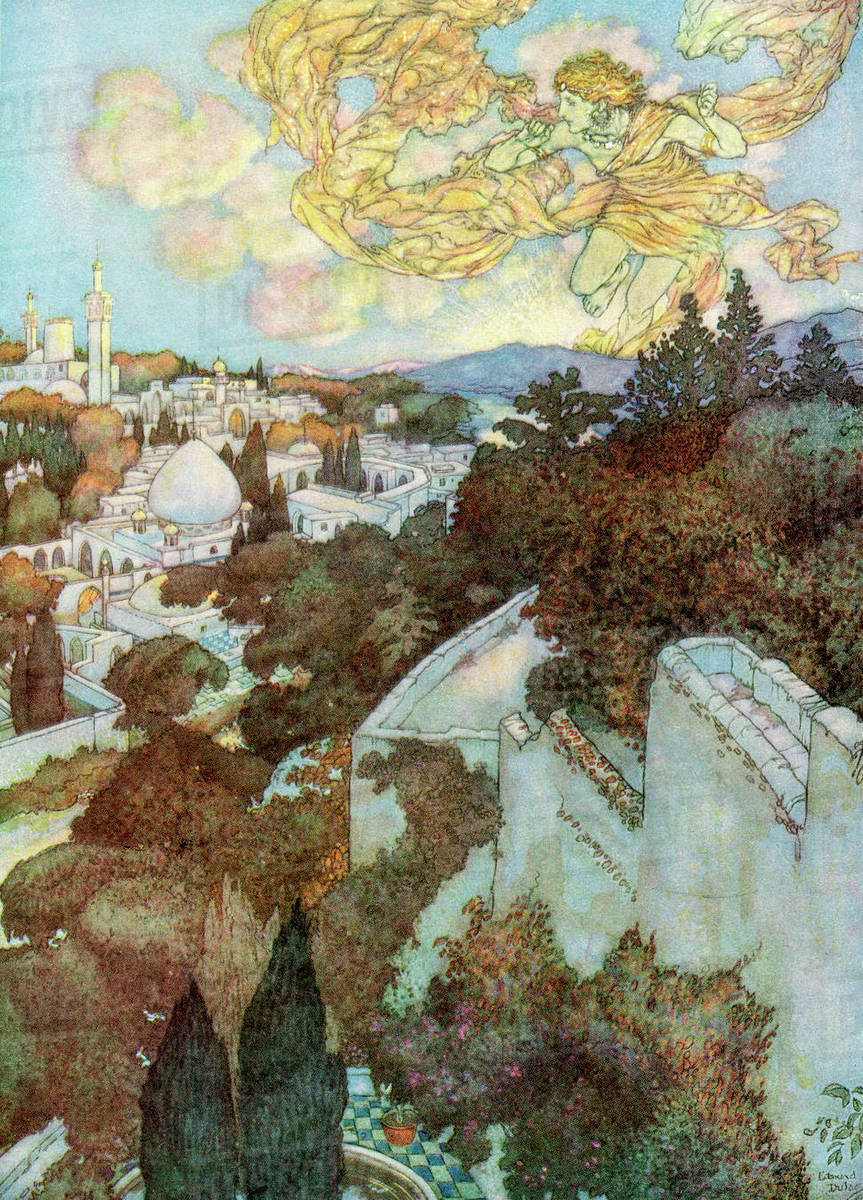








 netusha naidu [ نتشا ]